
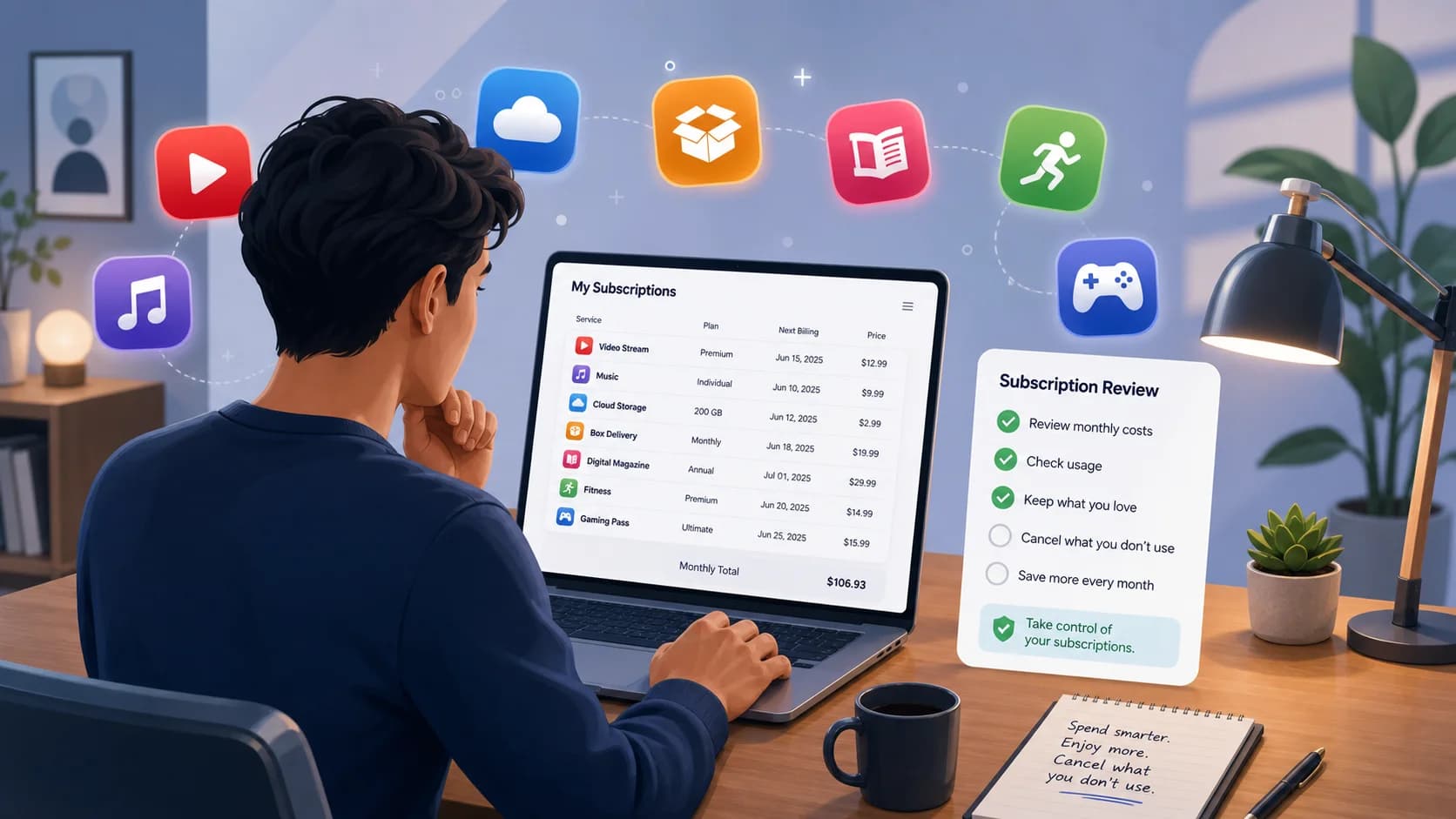
You are probably paying for at least one subscription you have not used in months. you are probably paying for at least one subscription you have not used in months. The average American household spends $273 per month on subscriptions and wastes about $47 of that monthly on services they do not use. But you do not need to cancel everything. You need to cancel the right things. This subscription audit guide walks you through a proven four-step process — Discover, Evaluate, Act, Prevent — that takes 60 to 90 minutes and typically saves $80 to $150 per month for most households. [subscription audit](https://ghost1.shoninfox.com/subscription-audit-2026-cut-1-500-per-year-without-downsizing-your-life-30-minute-method/)
Why Subscription Audits Matter in 2026
Subscription fatigue is real. The average American now manages 12 or more active subscriptions, from streaming services to software tools to gym memberships. That adds up to $3,276 per year — and researchers estimate 68% of subscribers forget at least one active subscription they are paying for. These forgotten charges are called zombie subscriptions, and they cost the average household $47 per month in pure waste. With inflation still pressing on household budgets, taking control of recurring expenses frees up cash without lifestyle surgery.
A subscription audit is not about cutting everything you enjoy. It is about making intentional choices. When you know exactly what you are paying for and why, you can decide what genuinely adds value to your life versus what simply filled a free-trial cart checkout or a promotional email. If you want a broader view of how subscriptions fit into your overall financial picture, check out our guide on how to budget for subscriptions as part of a complete money management system.
Step 1 — Discovery: Find ALL Your Subscriptions
Most people only see the charges that hit their main checking account. Most people only see the charges that hit their main checking account and forget about the ones buried in credit card statements or digital wallets. Here is where to look:
- Bank statements — go back 12 months and look for recurring charges
- Credit card statements — note annual subscriptions that may not show monthly
- Digital wallets — Apple Wallet, Google Pay, PayPal, and Amazon all store payment methods with active subscriptions
- Email inbox — search for receipt, renewal, subscription, and confirmation keywords
- Phone app store — check both Apple App Store and Google Play for active subscriptions
- ISP and utility bills — internet, phone, and streaming bundles often hide inside these
Make a master list with four columns: Service Name, Monthly Cost, Annual Cost (if applicable), and Last Used Date. This single document becomes your audit foundation. It also helps you spot annual subscriptions that feel small on a monthly basis but add up significantly over a year. If tracking down every expense feels overwhelming, a step-by-step expense tracking guide can help you build the habit of monitoring where your money goes each month.
Step 2 — Evaluation: Decide What to Keep vs. Cancel
Once you have your full list, ask yourself these five questions about each one for every subscription on your list:
- Did I use this service at least once in the past 30 days?
- Would I sign up for this today if I were not already paying for it?
- Does this service save me time, money, or provide meaningful entertainment?
- Can I get this same value cheaper from an alternative?
- Am I keeping this out of habit, guilt, or fear of missing out?
Sort each subscription into one of three categories: Keep, Pause, or Cancel. Keep means it earns its spot every month. Pause means you want it back eventually but can live without it right now. Cancel means it is not providing enough value to justify the cost. A rotation strategy also works well here — if you have three streaming services, try keeping one active for a month, then switching to another the next month. Most platforms allow you to pause rather than cancel, which means you keep your viewing history and preferences.
Family plans and student discounts can dramatically reduce costs without losing access. Before canceling, call or chat with the provider and ask if a discount is available. Many companies would rather keep you at a reduced rate than lose you entirely. For more strategies on negotiating bills and cutting expenses, explore our guide to stopping paycheck-to-paycheck living.
Step 3 — Action: Cancel, Negotiate, or Pause
Now you are ready to act. Start with the easiest cancellations first to build momentum.
Cancellation Instructions by Category
- Streaming services — cancel online through account settings; most do not require a phone call
- Gym memberships — check if you can freeze instead of cancel; some require in-person visit
- Software and SaaS — check for annual billing discounts before canceling; downgrade plans first
- News and publications — most offer digital-only or reduced-cost tiers as an alternative
- Meal kit services — can usually be paused for up to 12 weeks
- Subscription boxes — most have online cancellation with no waiting period
Negotiation Script Template
When you call to negotiate, here is a simple script that works: "I have been a customer for [X months/years] and I am considering canceling because the cost no longer fits my budget. Are there any retention offers, discounts, or lower-tier plans available?" This approach is polite but direct, and it signals you are serious without being confrontational. Many representatives have the authority to offer 20% to 50% discounts or waived fees for loyal customers who ask.
Step 4 — Prevention: Stop Subscription Creep
Without a system to track what you are paying for, subscription creep quietly brings you back to where you started. Here is how to prevent it. Subscription creep happens slowly — a free trial here, a promotional deal there — and before you know it, your monthly tab is back to $273.
- Set a monthly calendar reminder to review your subscriptions — 15 minutes is enough
- Use a subscription tracker spreadsheet or app to log every active subscription in one place
- Never enter credit card details during a free trial — use a virtual card or PayPal instead
- Turn off auto-renewal notifications in your phone settings
- Apply the 30-day rule: wait a full month before committing to any new subscription
Red flags that signal subscription fatigue include: opening an app and not remembering you pay for it, paying for multiple services that do the same thing, or noticing your bank balance dropping faster than expected. If any of these sound familiar, it is time for another audit. Building an emergency fund of three to six months of expenses reduces the anxiety that drives impulse subscription sign-ups. When you have a financial cushion, you are less likely to pay for things you barely use out of fear of missing out.
Common Subscription Audit Mistakes
- Only checking one bank account — subscriptions hide across multiple cards and accounts
- Forgetting annual subscriptions — these do not show up as monthly charges
- Not involving family members — spouses and partners often have their own subscriptions
- Canceling everything at once — the goal is intentional spending, not restriction
- Not setting up prevention systems — without a tracker, creep returns within months
FAQ — Subscription Audit Questions
How many subscriptions does the average person have?
The average American has 12 or more active subscriptions, spending roughly $273 per month or $3,276 per year on recurring charges.
What is the easiest way to find all my subscriptions?
Search your email for receipt and subscription keywords, check your bank and credit card statements from the past 12 months, and review your digital wallet payment methods. Most people find at least two to four forgotten subscriptions this way.
Can I get a refund for subscriptions I forgot to cancel?
Some companies offer partial refunds if you contact them promptly, especially for annual subscriptions. It never hurts to ask. Streaming services and software companies are often more flexible than people expect.
What subscriptions are actually worth keeping?
Subscriptions worth keeping typically save you time, money, or provide consistent genuine enjoyment. Examples include health insurance, essential software you use daily for work, and services that replace more expensive alternatives.
How do I stop free trials from turning into paid subscriptions?
Set a calendar reminder three days before any free trial ends. Use a virtual credit card or prepaid card for trial sign-ups so the charge automatically fails. Or simply write down the cancellation deadline and treat it like any other bill payment.
Are subscription tracker apps safe to use?
Reputable subscription tracker apps use bank-level encryption and do not store your actual account numbers. Stick to well-known apps with strong privacy policies and two-factor authentication options.
What if my family shares subscriptions?
Family plans can significantly reduce per-person costs. Before canceling individual subscriptions, check if a family or shared plan is available. You can often add multiple users to streaming, software, and cloud storage plans for a small additional fee.
Is it worth paying for a subscription management app?
If you struggle to keep track of multiple subscriptions, a management app can pay for itself within the first month by identifying even one zombie subscription. Look for apps that offer cancellation assistance and renewal alerts.
Take control of your money today
Start free with Spendmate — track expenses, plan budgets, and reach your financial goals.
Start free with Spendmate