
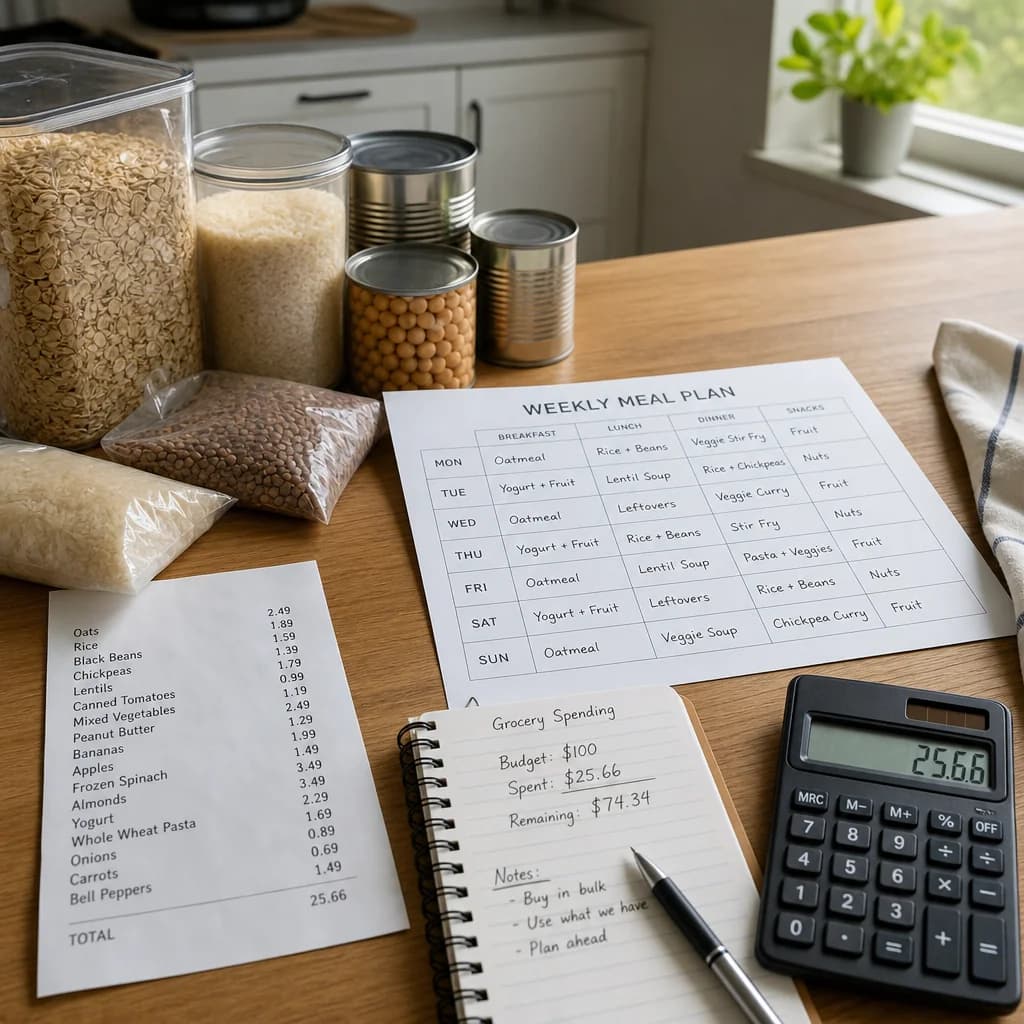
A grocery budget is a simple spending limit for the food you buy to cook and eat at home. It should feel useful, not restrictive. The goal is to give every grocery dollar a job so you can feed your household well without wondering where the money went.
If food spending feels random right now, that does not mean you are bad with money. Grocery prices change, families eat differently, and one busy week can throw everything off. What helps is a repeatable system: set a monthly target, turn it into weekly limits, plan before you shop, and adjust based on real receipts.
What a grocery budget is
When people search how to budget for groceries, they usually want a realistic number and a method they can keep using. Think of your grocery budget as a working estimate, not a perfect guess. It should cover regular meals, basic pantry staples, and the way your household actually lives.
- Groceries = food and drink you bring home to prepare or eat there
- Dining out = restaurants, delivery, coffee runs, and takeout
- Household items can be tracked in the same store trip, but it helps to separate them in your budget
Start with your household size and eating habits
Household size matters, but habits matter just as much. A single person who cooks every meal may spend more than a couple who eat out often. A family with teens, allergies, pets, or specialty foods may need more room than a generic average suggests.
Use USDA food plans as a benchmark, then personalize from there. Benchmarks give you a starting point. Your own receipts show what your real life costs.
- How many people eat from this budget most weeks?
- How many meals are cooked at home?
- Do you buy baby items, pet food, or specialty products?
- Do you shop at discount stores, warehouse clubs, or higher-price stores?
- Do you tend to buy in bulk, shop online, or make extra trips during the week?
Step 1: Set a monthly grocery target
Start with last month if you have it. Review bank or card statements, grocery app history, and paper receipts. Add up only grocery spending, not restaurants. If you do not have a clean number yet, choose a practical starting target based on your household size and current spending patterns.
Example: if you spent about $760 last month but half of that came from unplanned trips, set a first target of $700 and focus on reducing waste, not cutting food quality. If your spending is completely unclear, give yourself one tracking month before making aggressive changes.
Using USDA food plans as a benchmark
USDA food plans can help you sense-check your target. They are not rules. Use them as a rough frame, then adjust for your region, household needs, and inflation. The best grocery budget is one you can actually follow for a full month.
Step 2: Break it into weekly limits
Monthly budgets are useful, but weekly limits are easier to manage in the aisle. Divide your monthly target by 4.3 to get a realistic weekly number. A $650 monthly grocery budget is roughly $150 per week. That gives you a clear stop point before small extras snowball.
- Monthly target: $500 → weekly guide: about $115
- Monthly target: $650 → weekly guide: about $150
- Monthly target: $900 → weekly guide: about $210
If your household shops in big warehouse runs, keep one core weekly target and one separate line for bulk restocks. That way you do not feel like you failed every time you buy a large package of staples.
Step 3: Plan meals before you shop
Meal planning is the fastest way to make a grocery budget work. You do not need a color-coded system. Pick 4 to 6 dinners, 2 easy lunches, and a short breakfast rotation. Then check your fridge, freezer, and pantry before building the list.
- Choose meals that reuse ingredients across the week
- Plan one low-effort night for busy days
- Keep a short backup meal list for schedule changes
- Build snacks and school lunches into the list instead of treating them as surprises
This is also where store strategy matters. If you shop at multiple stores, assign jobs to each one. Buy basics and store brands at the cheaper store. Use the second stop only for the items you truly cannot get elsewhere.
How to separate groceries from eating out
Do not bury takeout inside the grocery budget. It hides the real problem and makes food spending hard to control. Give restaurants and delivery their own category, even if it is small. That keeps your grocery number honest.
Step 4: Track receipts and adjust fast
Receipt tracking matters because grocery budgets drift quietly. One extra freezer item, a checkout-lane add-on, and a midweek refill can blow the plan without feeling dramatic. A two-minute receipt review fixes that.
- Write each trip total in your phone notes or spreadsheet
- Mark the week number beside it
- Notice what keeps pushing costs up: drinks, snacks, convenience foods, or duplicate items
- Adjust next week instead of waiting until month-end
If your bill changes every week, that is normal. Look for the monthly pattern. One higher week does not mean the budget failed. It may mean you stocked up on meat, bought household basics, or shopped before a holiday.
Step 5: Cut waste without cutting nutrition
The smartest grocery budget is not the cheapest possible cart. It is the cart that gets eaten. Waste is expensive, and so is buying “healthy” food that no one in your house will touch. Keep nutrition in the plan by pairing affordable basics with a few high-value convenience items you know your household uses.
- Use store brands for staples when the quality works for you
- Freeze bread, meat, and leftovers before they go bad
- Buy produce in the form your household actually eats
- Use a good / better / best system: must-have basics, helpful extras, and optional treats
How to budget groceries for a family
Families need flexibility. Kids may eat differently week to week, and school schedules can create more convenience spending than expected. Start with one total household number, then stress-test it against lunch items, snacks, bulk staples, and any specialty foods. If you feed four people, your budget should reflect four real appetites, not an idealized shopping list.
For tight-income households, simplify before you sacrifice. Build around lower-cost meals you already like, use a repeating breakfast and lunch routine, and keep one list of cheapest reliable staples. If you receive SNAP or another benefit, map your monthly amount into weekly limits the same way you would any other grocery budget.
How to budget if you shop at multiple stores or buy in bulk
Bulk buying only saves money if the food gets used and the upfront cost fits your month. Track warehouse trips separately so you can see whether they lower your average cost over time. If you rotate between stores, compare price patterns for the same 10 to 15 items instead of trying to optimize every product in the cart.
Common grocery budgeting mistakes
- Using one national average and assuming it should fit your household perfectly
- Skipping meal planning and hoping the list will make itself
- Mixing groceries, takeout, and household items into one blurry category
- Setting a weekly limit but never checking receipts
- Cutting too hard in week one, then overspending from frustration later
FAQ
How much should I budget for groceries per month?
Start with your recent grocery spending, then compare it with a USDA-style benchmark for your household size. The right number depends on how often you cook, where you shop, and whether you buy specialty items.
Is a weekly grocery budget better than monthly?
A monthly target gives you the big picture, but a weekly limit is easier to follow in real life. The best system uses both: one monthly cap and one weekly guide.
How do I budget groceries on a tight income?
Focus on repeat meals, affordable staples, and a short shopping list built from what your household actually eats. Track receipts closely and separate groceries from dining out so you can see what needs adjusting.
What if my grocery bill keeps changing?
That is normal. Look at the full month instead of one trip. Grocery bills move because of bulk buys, holidays, schedule changes, and price swings. Use the pattern to adjust next month.
Should I include household items in my grocery budget?
You can, but it is cleaner to track them separately when possible. That makes it easier to see your true food costs and understand why a store receipt ran high.
Set one weekly grocery limit, plan your next 4 to 6 dinners, and track every receipt for seven days. That small reset will teach you more than guessing at a perfect budget. Once you know your real average, you can build a monthly budget that actually works.
Take control of your money today
Start free with Spendmate — track expenses, plan budgets, and reach your financial goals.
Start free with Spendmate