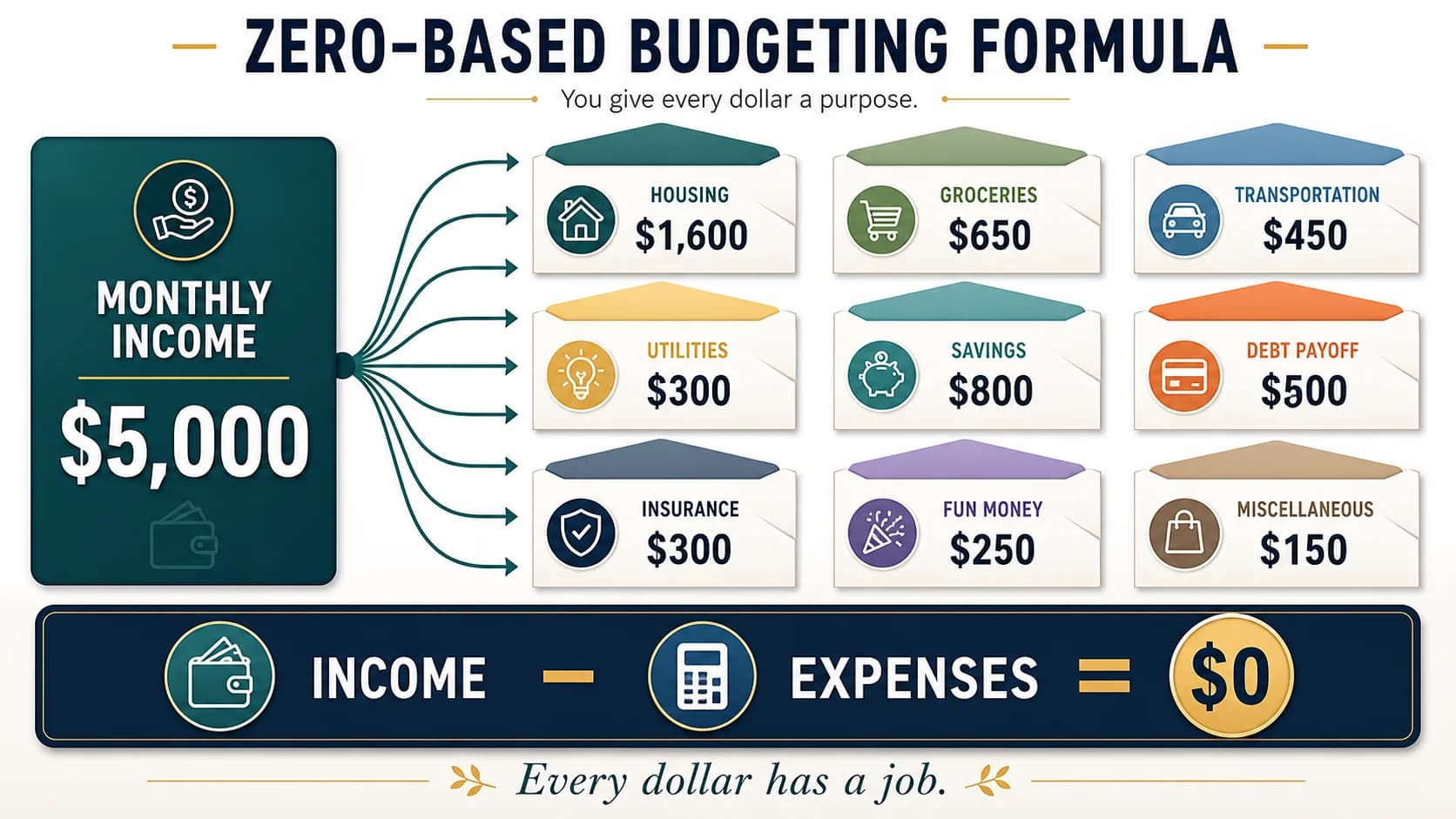
You get paid. You pay your bills. You spend on things throughout the month. And somehow, at the end of the month, you look at your bank account and think: where did all my money go? You are not alone. Millions of Americans feel the same way. The problem is not discipline — it is design. Most budgets assume your money should figure itself out. Zero-based budgeting for beginners flips that assumption entirely: every dollar you earn gets a specific job before the month begins. Rent gets a job. Groceries get a job. Savings gets a job. Even your fun money gets a job. By the time you are done, your income minus your expenses equals exactly zero. No money is unassigned. Nothing is left to chance. This guide walks you through how to build a zero-based budget from scratch — with real examples, a free template, and strategies that actually work in 2026.
What Is Zero-Based Budgeting? (The Simple Explanation)
Zero-based budgeting (ZBB) is a money management method where your income minus your planned expenses equals zero at the end of each month. Every dollar is assigned a job — before you spend it. The key difference from traditional budgeting is that you start from zero each month rather than carrying forward last month's spending habits.
The concept originated in corporate accounting in the 1970s and was popularized for personal finance by Dave Ramsey through his baby steps program. Often referred to as zero-sum budgeting in some personal finance circles, zero-based budgeting is one of the most effective methods for people who want complete control over where their money goes. The core idea is straightforward: every dollar has a purpose, and you decide that purpose before the month begins.
Zero-based budgeting matters more than ever in 2026. Groceries have risen 22% since 2020, rent is up 18%, and insurance costs have climbed 15% (Bureau of Labor Statistics Consumer Price Index data). When every dollar counts more than it used to, assigning each one a job is not optional — it is essential. If you are tired of wondering where your money went, this method gives you answers before you spend a single cent.
Take control of your money today
Start free with Spendmate — track expenses, plan budgets, and reach your financial goals.
Start free with Spendmate