
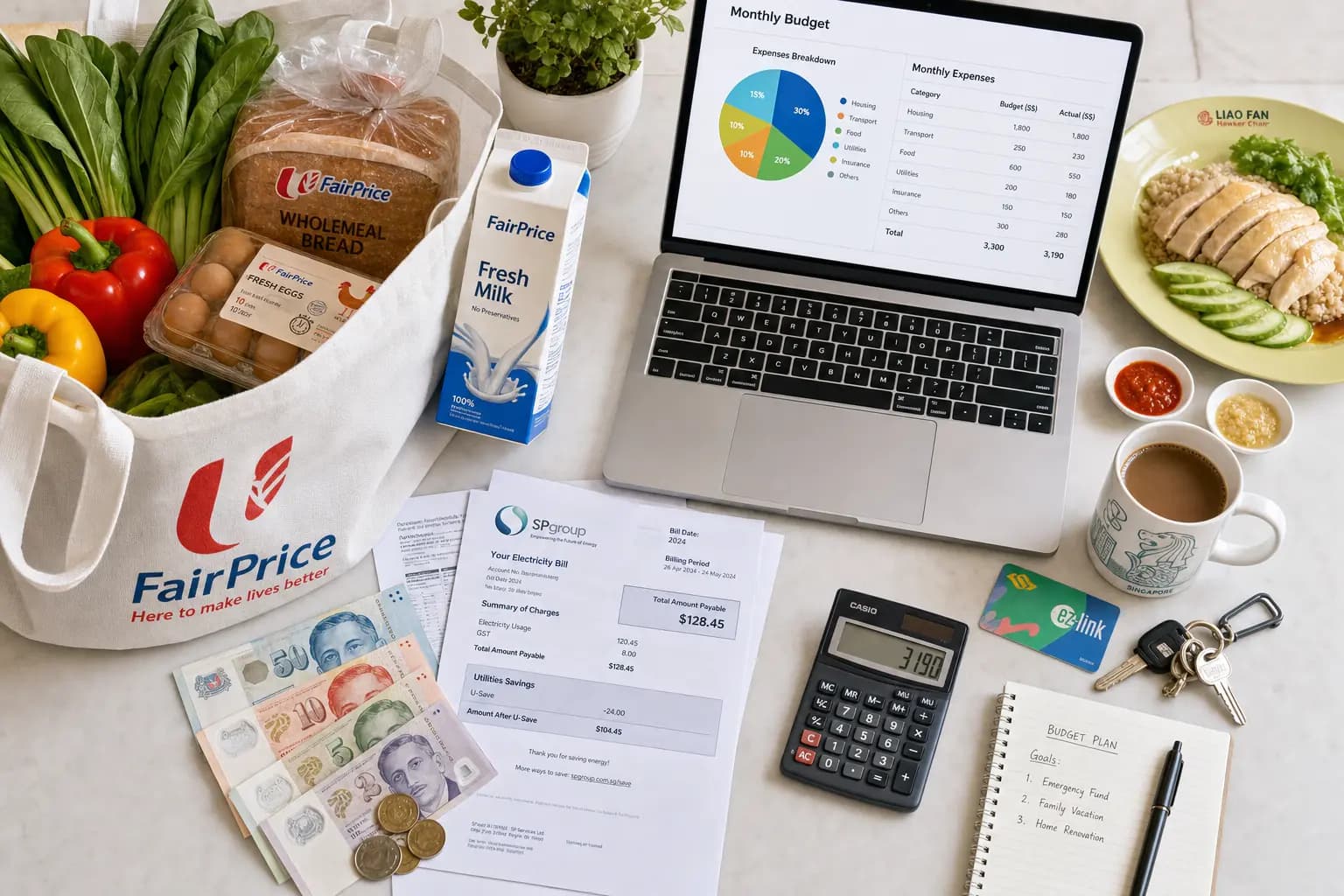
Singapore inflation is at its highest level in 15 years. Your groceries cost more. Your hawker meals cost more. Your utilities cost more. Your transport costs more. Everything costs more. But your salary is not keeping up. Here is the truth: inflation is not your fault. But how you respond to it is your choice. This guide gives you the exact playbook: we break down where the inflation pain is hitting hardest, category by category, and then we give you the specific strategies Singaporean families are using to cut $400–$800 per month from their expenses. No deprivation required. Just smarter choices.
<2>Why Singapore Inflation Feels Different (And Why It Is)Singapore has a unique inflation profile. Unlike economies that print money freely, Singapore relies heavily on imported inflation — meaning when global commodity prices rise, fuel costs climb, or food prices increase overseas, Singaporeans feel it directly because almost everything is imported. Add to that the GST increase from 8% to 9%, and you have got a double pressure on household budgets. The Monetary Authority of Singapore (MAS) has been using SGD appreciation as its primary tool to combat imported inflation — which helps with import costs but does not directly lower the prices you see at NTUC or the hawker centre. For the latest official inflation data, refer to the Singapore Department of Statistics (DOS) at singstat.gov.sg.
What does 4% inflation actually mean for your household? For the average Singaporean family spending $2,100 per month on essentials, that is approximately $84–$130 extra per month gone to inflation — $1,008–$1,560 per year. The GST increase adds another $200–$400 annually depending on your consumption pattern. The psychological toll is real too: watching prices rise while your income stays flat creates a sense of financial erosion that feels worse than the raw numbers suggest.
According to Singapore's Household Expenditure Survey from the Department of Statistics (DOS), here is the real picture of where inflation is hitting Singapore households hardest in 2026:
- Groceries (NTUC, FairPrice, Sheng Siong): $600/month avg, +8% inflation impact = $48 extra/month
- Dining Out (Hawker centres, cafés): $500/month avg, +6% inflation impact = $30 extra/month
- Transport (MRT, bus, ERP, petrol): $400/month avg, +5% inflation impact = $20 extra/month
- Utilities (SP Group, gas): $250/month avg, +12% inflation impact = $30 extra/month
- Household essentials: $200/month avg, +5% inflation impact = $10 extra/month
- Entertainment and subscriptions: $150/month avg, +3% inflation impact = $5 extra/month
Total average monthly inflation impact: approximately $130–$143 per month, or $1,560–$1,716 per year. With the right strategies, you can reduce this impact by 50–70%, saving $400–$800 per month that stays in your pocket instead of disappearing to rising costs. For a complete budgeting framework to manage these expenses, see our budgeting for beginners Singapore guide.
<2>Strategy 1 — Grocery Savings (Save $80–$150 per Month)Groceries are the largest controllable household expense for most Singaporeans, and there is significant room to cut without resorting to inferior products.
<3>Where to Shop: The Geography of SavingsNot all supermarkets are equal. Sheng Siong is often cheaper for dry goods and pantry staples. NTUC FairPrice offers the best digital coupon ecosystem through their app. Wet markets beat supermarkets on fresh produce and proteins by 15–25% on average. Hao Mart and Value Dollar offer budget alternatives for basic essentials. For household bulk buys, Sheng Siong Wholesale or Costco make sense if you have storage space. The key habit: compare prices per unit, not just shelf price.
<3>The NTUC FairPrice App StrategyThe FairPrice app is the most underutilised tool in the Singapore grocery shopper's arsenal. Before every shop, spend three minutes clipping digital coupons. FairPrice member prices versus non-member prices can save you 5–15% on your total bill. FairPriceXtra offers additional discounts for bulk purchases. The "3 for 2" promotions are genuinely good deals when you actually need all three items — avoid them when they are just tempting you to buy things you would not otherwise purchase. One habit that costs nothing: never buy pre-cut fruits and vegetables, which carry a 30% premium over whole produce.
<3>Wet Market Smart ShoppingWet markets offer the freshest produce at significantly lower prices than supermarkets — if you shop strategically. Early morning (6–8 AM) offers the best selection; late afternoon (after 5 PM) often sees price reductions on unsold items. Building a relationship with your wet market vendors means better service and occasional discounts. For fish, meat, and vegetables, wet markets are almost always cheaper than supermarket equivalents. A weekly wet market trip combined with one supermarket shop can save a family of four approximately $80–$150 per month.
<3>The Home Cooking ChallengeThe single biggest grocery savings lever is simple: cook more at home. A hawker meal costs $4–$8 per person. A home-cooked equivalent costs $2–$4 per person. For a family of four eating one extra meal at home per day instead of at a hawker centre, the monthly savings can reach $200–$400. The 30-day challenge: aim to cook at home five nights per week. Batch cooking on Sundays — prepare rice, chop vegetables, marinate proteins — makes weekday cooking fast enough that it replaces convenience rather than feeling like extra work.
<2>Strategy 2 — Transport Savings (Save $50–$120 per Month)Transport is a significant monthly expense that many Singaporeans accept as fixed. But there are meaningful savings available for those willing to optimise.
<3>Public Transport OptimisationSimplyGo EZ-Link cards offer convenience but not always the best value. Use the transit calculator on the Transit Link website to check whether a monthly pass makes sense for your commute pattern — for regular commuters, the monthly concession card can save 15–20% on regular travel costs. Off-peak travel (before 6:30 AM and after 8:45 AM on MRT) offers discounted fares and a less crowded ride. Walking is free transport AND free exercise — for short distances under 2km, consider walking instead of taking a bus or MRT.
<3>Petrol and ERP StrategyFuel card loyalty programmes at SPC, Caltex, and Shell can save 5–10% on petrol over a year. Watch the USD/SGD exchange rate — when the Singapore dollar strengthens against the US dollar, petrol prices typically ease, and that is the time to fill up. For ERP, use alternative routes where possible — Waze and Google Maps now show real-time ERP charges, so you can route around peak toll periods. Consider telemetry-based insurance (like NTUC's Drive 54) which offers premium discounts for low-mileage drivers. The real cost of owning a car in Singapore — COE, petrol, ERP, parking, maintenance — is $1,500–$3,000 per month, making it one of the most expensive car ownership costs globally, according to the Land Transport Authority (LTA). If you drive daily, explore whether a second car is truly necessary.
<2>Strategy 3 — Utilities Reduction (Save $40–$80 per Month)Utilities bills feel like a fixed cost, but Singapore households can meaningfully reduce them with targeted changes.
<3>Electricity Bill OptimisationSP Group's two-tiered tariff means higher usage is charged at a higher rate per kWh. The average Singapore household can meaningfully reduce consumption with a few targeted steps: air-conditioner maintenance is the biggest lever — a dirty filter can increase AC energy consumption by 10–15%, costing an extra $200 per year. Clean or replace AC filters monthly. Switching all light bulbs to LED saves $100–$200 per year. Turning off standby power on devices like TVs, gaming consoles, and chargers saves approximately $30 per month — these devices silently drain energy even when not in use. Using a fan instead of AC when weather permits can save $20–$40 per month.
<3>Water and Gas ReductionPUB's water conservation tips include fixing leaking taps promptly (one dripping tap can waste 3,000 litres per month) and installing water-efficient fixtures. A water-efficient showerhead costs $20–$50 and can save a family of four $100–$150 per year. For cooking, using lids on pots reduces gas consumption by 20–30%. A pressure cooker is both faster and more energy-efficient for cooking beans, grains, and tough cuts of meat. Batch cooking — making larger quantities to refrigerate or freeze — reduces per-meal gas usage.
<2>Strategy 4 — Dining Out Smart (Save $60–$150 per Month)Singapore's hawker culture is actually a financial advantage — it is one of the most affordable ways to eat well in a developed city. But even hawker spending can be optimised.
<3>Hawker Centre StrategyNot all hawker centres offer the same value. A cai png (rice with dishes) at an industrial area hawker centre can cost $3–$4, while the same meal at a tourist-area hawker centre can cost $6–$8. Some of the best value hawker centres in Singapore include ABC Brickworks, Bedok, and Katong. Making coffee at home instead of buying kopi at a coffee shop saves approximately $60–$100 per month — a daily $1.50 kopi versus a $0.20 home brew adds up to over $400 per year. The $3 meal versus the $10 meal at a hawker centre comes down to choosing dishes carefully: plain rice with two vegetable dishes costs significantly less than a premium fish head curry or char kway teow.
<3>Restaurant and Café ReductionThe "special occasion" framework transforms dining out from an unconscious habit into a conscious choice. Restaurant meals cost 3–5 times more than hawker equivalents. Reserve restaurants for genuine celebrations and use hawker centres for regular dining. Lunch set meals at restaurants are typically 30–40% cheaper than dinner menus for equivalent dishes. Credit card dining deals and mobile apps like Chope and Burpple occasionally offer meaningful discounts — but only use them if you were already planning to eat there. The most impactful habit: bring lunch to work three days per week. A $5 home-packed lunch versus a $12 hawker centre meal saves $21 per week, or over $1,000 per year.
<2>Strategy 5 — Household and Miscellaneous (Save $50–$100 per Month) <3>Subscription and Insurance AuditSingapore households frequently overpay for insurance they do not need or do not fully understand. Conducting a periodic insurance audit — ideally every two years — can identify over-insurance, duplicate coverage, or policies that no longer match your life stage. Term life insurance is significantly cheaper than whole life insurance and provides pure protection. For health coverage, review whether you truly need private integrated shield plans or whether the public healthcare system coverage is sufficient for your needs. Cancel streaming subscriptions you have not used in 30 days — Singapore has Netflix, Disney+, Apple TV+, and Spotify family plans that often go underutilised.
<3>Mobile and Internet Plan OptimisationSIM-only plans in Singapore now start from $10–$15 per month for light users, versus $30–$50 for bundled plans that include a phone. If you are still on a bundled plan more than 24 months after your contract ended, you are almost certainly overpaying. Compare current plans at comparehero.my or techlew.com — the market changes frequently. For home broadband, always call your provider to renegotiate after your contract ends. Providers regularly offer loyalty discounts to customers who threaten to switch. Review all recurring subscriptions — streaming services, gym memberships, app subscriptions — and cancel any that do not deliver value equal to their cost.
<2>The Singapore Government Support You Might Be MissingSingapore's government has several support schemes most households qualify for without realising it. Ensure you are claiming everything you are entitled to.
<3>Financial Support Scheme (FSS)The Financial Support Scheme provides $200–$600 per year for eligible Singaporean households based on income thresholds. If your household income has been affected — by job loss, underemployment, or business disruption — check your eligibility at go.gov.sg/fss. The GST Voucher Scheme provides additional cash offsets to lower-income Singaporeans, automatically disbursed based on annual Assessable Income. CDC (Community Development Council) Vouchers are distributed annually — $100–$200 per household depending on your district and means testing. If you have not claimed yours, check with your local CDC office.
<3>Other Schemes to Leverage- Baby Bonus Scheme: For parents with children — education and development accounts for approved expenditures
- Edusave: For education expenses — understand your child's annual allocation
- MediSave: Mandatory but worth understanding your account limits and what it covers
- CPF contributions: The government's matching and interest is a form of guaranteed return — maximise your contributions where possible
- SkillsFuture Credits: For approved training courses — use it or lose it at the end of the validity period
- Grocery optimisation (wet market + FairPrice app): $80/month
- Utilities reduction (AC maintenance + LED + standby power): $40/month
- Mobile plan switch to SIM-only: $25/month
- Subscription audit (cancel unused): $20/month
- Dining reduction (two fewer hawker meals per week): $40/month
- Transport optimisation (off-peak travel + monthly pass review): $60/month
- Car costs review (insurance + ERP planning): $50/month
- Bulk buying household items: $40/month
- Insurance review: $50/month
- Home cooking increase (four extra nights per month): $100/month
- Car sharing or review with family: $80/month
- Major appliance energy-efficient upgrade: $20/month
Total possible savings: $450–$800 per month, or $5,400–$9,600 per year. Most households can achieve Tier 1 and Tier 2 savings without significant lifestyle changes. Tier 3 requires more commitment but delivers the highest returns. If your goal is to build a more comprehensive financial system starting from zero, our budgeting for beginners Singapore guide walks you through creating a complete financial plan from your first payslip.
<2>FAQ — Singapore Inflation- What is the inflation rate in Singapore in 2026?
- Singapore's headline inflation has been running at 3.5–4.2% in 2025–2026, the highest sustained level since 2008, according to the Monetary Authority of Singapore (MAS) and Singapore Department of Statistics (DOS). Core inflation (excluding accommodation and private transport) is around 2.5–3.0%. The MAS has been using SGD appreciation as a tool to combat imported inflation, which helps moderate the impact of global price increases on Singaporean households.
- How does inflation affect Singaporeans differently?
- Lower-income households feel inflation more acutely because essentials (food, transport, utilities) make up a larger share of their budget. The GST increase from 8% to 9% also disproportionately affects lower-income households who spend a higher percentage of their income on consumption. High-income households can absorb cost increases more easily, making targeted support schemes particularly important for equity.
- What can Singaporeans do to protect themselves from inflation?
- Focus on what you can control: shop smarter at groceries using the FairPrice app and wet markets, reduce utility waste through AC maintenance and energy-efficient habits, optimise your transport using monthly passes and off-peak travel, audit your subscriptions and insurance regularly, and cook more at home. Government schemes like CDC Vouchers and the Financial Support Scheme also provide targeted relief — check your eligibility at go.gov.sg.
- Should I invest during high inflation?
- Yes, but strategically. Equities historically outperform during moderate inflation. Consider low-cost index funds through DBS Vickers or FSMOne, Singapore Savings Bonds (currently offering 2.5–3.0% returns per year), and SRS contributions for tax relief. Avoid keeping too much cash in savings accounts as real returns can be negative during high inflation. A foundational budgeting approach helps you find the money to invest even during tight months.
- Is Singapore's inflation temporary or permanent?
- The elevated inflation of 2025–2026 is largely due to global factors (supply chain disruptions, energy prices, food commodity costs) and domestic policy (GST increase). Economists expect inflation to moderate to 2–3% by 2027–2028 as global conditions normalise and the GST impact fades. However, the habits you build now — grocery optimisation, utility reduction, smarter spending — will continue to save money regardless of inflation trends.
- How does the GST increase affect Singaporean households?
- The GST increase from 8% to 9% (implemented in two tranches) adds approximately $200–$400 per year to the average household's expenses, depending on consumption patterns. The GST Voucher Scheme provides cash offsets to lower-income Singaporeans to soften the impact. For essential goods and services, the GST is unavoidable — but strategic shopping choices and utility conservation can offset a meaningful portion of this increase.
- What is the average Singapore household spending?
- According to Singapore's Department of Statistics (DOS) Household Expenditure Survey, the average Singapore household spends approximately $4,500–$5,500 per month on consumption. Lower-income households spend $2,500–$3,500 while higher-income households can spend $8,000 or more. Housing costs (CPF or rental) are the largest component and are not fully captured in consumption expenditure figures, which is why a separate housing budget is necessary for accurate financial planning.
- Are savings accounts keeping up with inflation?
- Most Singapore savings accounts offer interest rates of 0.05–0.65% per annum, which is below the current inflation rate of 3.5–4.2%. This means cash in savings accounts is losing real purchasing power during high inflation periods. Better alternatives include Singapore Savings Bonds (currently offering 2.5–3.0% per annum, according to MAS), endowments or investment-linked policies for medium-term goals, and low-cost index funds for longer time horizons. Every dollar sitting in a low-interest savings account is working against you during high inflation.
Take control of your money today
Start free with Spendmate — track expenses, plan budgets, and reach your financial goals.
Start free with Spendmate