
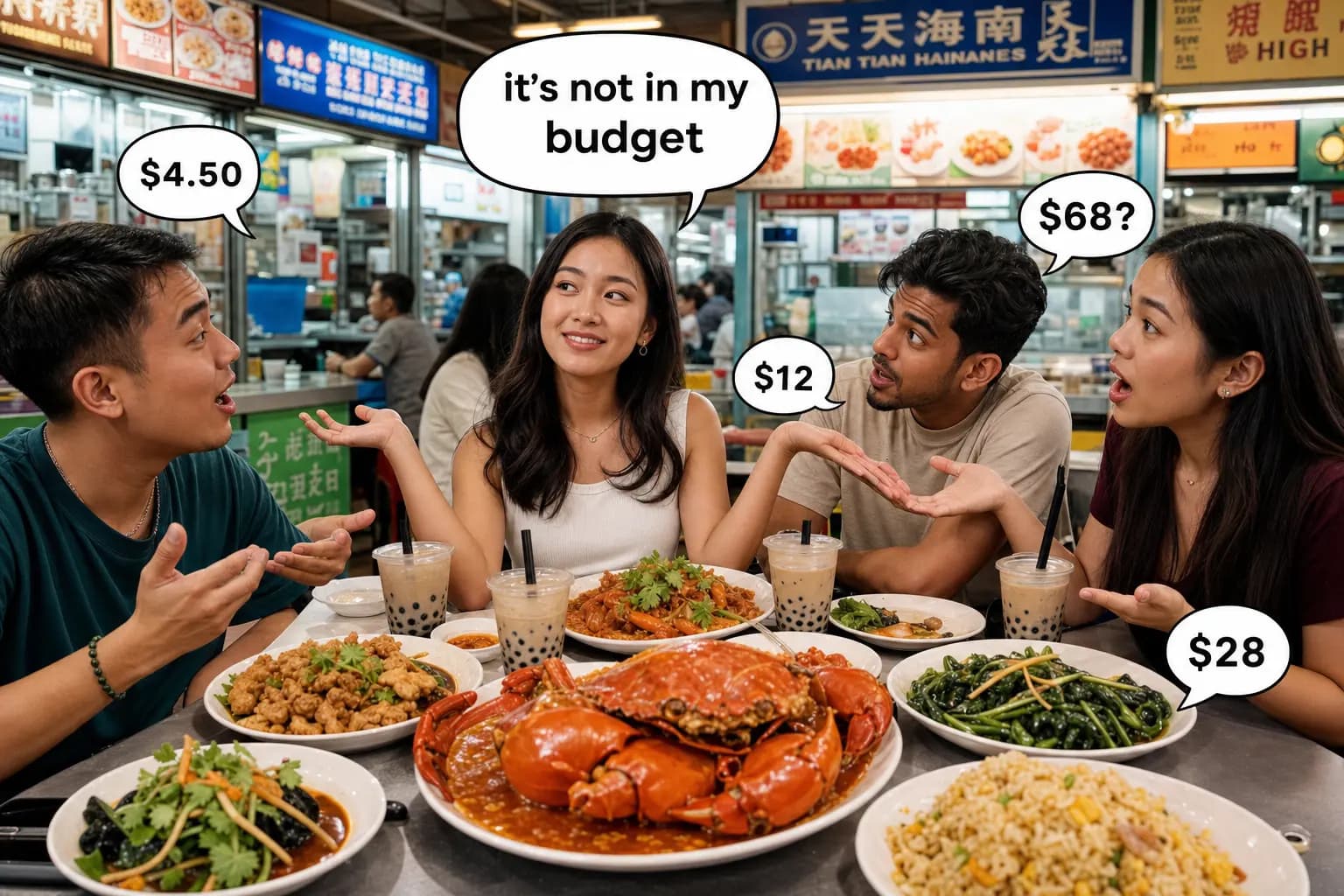
You know that feeling when your friends suggest another hawker session and your wallet is already crying? Or when everyone is booking flights to Japan and you are quietly calculating whether you can afford the $800 airfare without telling anyone? You are not alone. In Singapore, we spend an average of $525 to $1,497 per month on social activities we sometimes do not even enjoy, just to keep up, fit in, or avoid the awkwardness of saying no. Loud budgeting changes that. It is not about being poor or cheap. It is about being honest, out loud. "It's not in my budget" becomes a full sentence, not an apology. This guide gives you the exact scripts and systems you need to practice loud budgeting in Singapore and actually stick with it.
What Is Loud Budgeting? The Scripts-and-Systems Version
The Definition
Loud budgeting means being vocal about your financial boundaries instead of hiding them. Coined by TikTok creator @cavehermit in January 2024, the core principle is simple: "It's not in my budget" is a complete sentence, no apology, no justification needed. It sits opposite to quiet luxury and FIRE movement secrecy around money, and it is part of a broader Gen Z and Millennial shift toward financial transparency and open money conversations.
Why Singaporeans Are Doing It in 2026
Loud budgeting gained momentum as a reaction to "quiet luxury" and stealth wealth aesthetics. Post-inflation, with Singapore's CPI still elevated through 2025 to 2026, Gen Z is rejecting financial shame and secrecy. Social media has normalised money conversations, and the community validation is powerful: say it out loud and you are less likely to break your budget. Accountability meets authenticity.
The Singapore Social Spending Trap: What Never Saying No Actually Costs
Singapore has a unique social spending culture that can quietly derail your finances. Hawker centre and cafe culture means "let's catch up" can easily add $200 to $400 per month. Friend groups bring RGB, weekend activities, birthday dinners, and overseas trips. Family expectations include Chinese New Year hongbao, wedding gifts, and mandatory family meals. And then there is the Singaporean tendency to keep up with the Lim Peh, that relentless comparison to everyone else's carefully curated Instagram life.
Here is what never saying no actually costs the average young Singaporean per month. These numbers come from a 2025 Seedly consumer sentiment survey on Singapore social spending habits:
- Hawker centre catch-up ($8 to $15 per person, twice a week): $64 to $120 monthly
- Cafe brunch ($18 to $35 per person, twice a week): $144 to $280 monthly
- Birthday dinner ($40 to $80 per person): $40 to $80 monthly
- Concert or event ($80 to $250): $80 to $250 monthly
- Overseas trip (once a quarter, averaged monthly): $167 to $667 monthly
- RGB obligations ($30 to $100): $30 to $100 monthly
- Total potential social overspend: $525 to $1,497 per month
That $525 to $1,497 per month could fund a solid emergency fund, accelerate your savings goal, or even cover a BTO down payment. Loud budgeting is not about being cheem. It is about being intentional with your money.
Loud Budgeting Scripts: Exactly What to Say in Every Situation
The scripts below are the heart of loud budgeting. They remove the awkwardness of improvisation because you have already practiced them. Say them out loud to yourself the night before a social situation. It feels strange at first, but it works.
The Hawker Centre Script
When friends suggest a hawker catch-up you cannot afford: "I am doing a budget reset this month so I will skip the hawker session, but let's do a free walk at Marina Bay instead. I will bring teh halalt."
One reader, Marcus, tried this at his regular Geylang serai session with four friends. Three of them told him afterward they appreciated the honesty. One said he felt embarrassed at first but admitted he had been quietly broke for months. That conversation started a group-wide spending review.
The Cafe Brunch Script
When a friend suggests a cafe brunch at $30 per head: "That sounds great. I am trying to keep my weekend spending under $50 per week total, so maybe we do the $5 nasi lemak buffet at a hawker centre instead? Still great company."
The Overseas Trip Script
When everyone is booking a $1,500 Japan trip you cannot swing: "I really want to go but I am not in a position to spend $1,500 right now. Can we plan a Malaysia road trip instead? So much cheaper and still fun."
The Restaurant Split Bill Script
When friends want to order more and you have hit your food budget: "I already hit my food budget for this week so I will just have teh-o. You all go ahead."
The Work Lunch Script
When colleagues invite you to a $20 lunch: "I am on a $10 lunch budget this month. Anyone keen to go to the food court instead? Still get to eat together."
The Family Money Request Script
When parents or extended family ask for financial support: "I can contribute $X per month while I am building my emergency fund. Once that is done, I can look at increasing it."
The Four Systems That Make Loud Budgeting Stick
System 1: Know Your Numbers Before You Say Anything
Loud budgeting starts with numbers, not words. Before you announce anything to anyone, know exactly what you can afford to spend on social activities per month. Here is a sample budget for a $4,500 per month salary in Singapore:
- Needs (rent, utilities, transport, insurance): $1,800
- Savings and emergency fund: $900 (20 percent of income)
- Social spending buffer: $300 to $400
- Buffer for unexpected social invites: $100
Write these numbers down. Having them clear before you get into any social situation is what gives you the confidence to say no without fumbling.
System 2: The Budget Buddy System
Loud budgeting works, but it becomes genuinely transformative with accountability. Find one or two friends who are also trying to get their finances in order. Agree to hold each other accountable. Share your social spending limit at the start of each week. Text each other "It's not in my budget this week" when you need to decline. Some Singaporean Telegram groups have built this into a full community system, and the data shows it works: people with accountability partners save significantly more per month than solo budgeters.
System 3: Reframe Every "No" as a "Yes"
Every "no" to overspending is a "yes" to your financial goals. Every $50 declined at a cafe equals $600 per year toward your emergency fund. Every $200 saved on a trip equals one month closer to your first $10,000. Loud budgeting is not about being cheap. It is about being intentional. The money you save compounds, and the confidence from living within your means is genuinely priceless.
System 4: The Weekly 10-Minute Check-In
Set aside 10 minutes every Sunday evening. Review the week, update your tracker, and plan the week ahead. This habit is what separates loud budgeters who succeed from those who quit after two weeks. Here is the template:
- Hawker and food: Budget $80, Spent $45, Remaining $35. Status: ON TRACK
- Social activities: Budget $150, Spent $80, Remaining $70. Status: ON TRACK
- Entertainment: Budget $50, Spent $0, Remaining $50. Status: ON TRACK
- Friend's birthday gift: Budget $40, Spent $0, Remaining $40. Status: PENDING
- Total Social: Budget $320, Spent $125, Remaining $195. Status: GREEN
How to Handle Reactions When You Loud Budget in Singapore
You will get reactions. Some are predictable, some are surprising. Here is how to handle the most common ones based on what has actually worked for Singaporeans practicing loud budgeting.
- "Aiyoh, why so cheem or poor?" — "Not poor, just intentional. I am saving for my emergency fund and it matters to me."
- "You always say no, so boring sia." — "I know it seems that way. I am trying to hit a savings target. How about we do something free, parkrun, hiking, or just chat at my place with teh halalt?"
- "Wah, you earn enough why need to save so much?" — "The more you earn, the more you can save. I want a concrete goal, like a housing deposit, more than I want this dinner."
- "Maybe you should find a better job." — "Ha, if only. But seriously, budgeting is for everyone regardless of income."
- Pressure to upgrade lifestyle after a raise — "Actually, my plan is to save 80 percent of any raise. Lifestyle creep is real."
The key is to be brief, honest, and not apologetic. "It's not in my budget" is a complete sentence. In Singapore's inflationary environment, protecting your budget is smart, not shameful.
Not every conversation goes smoothly. Sometimes people push back harder than expected. When a colleague repeatedly pressured Jin, a 29-year-old designer, to join an expensive yacht party, she had to be firmer: "I have already said no twice. I need you to respect that." The awkwardness lasted about a week, then her colleague stopped asking. Jin says the temporary social friction was worth the $350 she saved. Real friends will adjust. The ones who do not were probably not worth the money anyway.
Loud Budgeting Tools Singaporeans Actually Use
Best Apps for Loud Budgeting
- Seedly and MoneyOwl: Best for Singapore-specific budgeting with local expense categories and SGD amounts
- YNAB (You Need a Budget): Strong for loud budgeting because every dollar is assigned, making it easy to point to your budget when someone asks why you are not spending
- DBS NAV Planner and OCBC Digital: Native Singapore banking apps with budgeting features built in and real-time spending alerts
- Google Sheets: A shared spreadsheet with your budget buddy, tracking income, categories, and weekly social spending
If you want a full breakdown of the best budgeting apps in Singapore in 2026, our guide covers the top 10 tools with specific features that matter for loud budgeters.
FAQ: Loud Budgeting Questions
Loud budgeting is a personal finance movement where you openly state your financial boundaries instead of hiding them. Instead of making excuses or lying about why you cannot spend money, you simply say "It's not in my budget" as a complete, honest answer. It is about normalising money conversations and refusing to feel shame about your financial choices.
Quiet saving means you save money privately without telling anyone. Loud budgeting means you announce your limits openly and discuss money without shame. Loud budgeting works best when friends and community know your boundaries.
Real friends respect your boundaries. You may drift from friends who only valued you for your spending power, and that is probably a good thing for both your social life and your bank account.
Say something specific and brief like "I am on a budget reset this month so I will skip this one" or "I am trying to keep my weekend spending under $50." Most Singaporeans respect the directness.
Start with your parents if they are financially stable. Share your savings goals and ask for their support. For extended family, set clear hongbao and gift budgets in advance. For siblings, offer free activities like hiking or park walks.
Keep it professional. "I am trying to reduce my weekend spending" works without oversharing. Avoid sharing exact salaries unless you are close to colleagues. For team lunches, suggest cheaper options.
Yes. Research on commitment devices and public goal-setting shows that stating your intention publicly increases follow-through.
No. Many high-income earners practice loud budgeting. The richest people often have the strictest budgets.
FOMO is normal. When you see friends at a concert you skipped, remind yourself that you chose $250 toward your emergency fund instead. Write it down. Review it weekly.
Absolutely. Loud budgeting is not about deprivation. It is about choosing. You can still go to hawker centres, catch movies, and travel. You just do it within your budget and without shame.
Take control of your money today
Start free with Spendmate — track expenses, plan budgets, and reach your financial goals.
Start free with Spendmate