
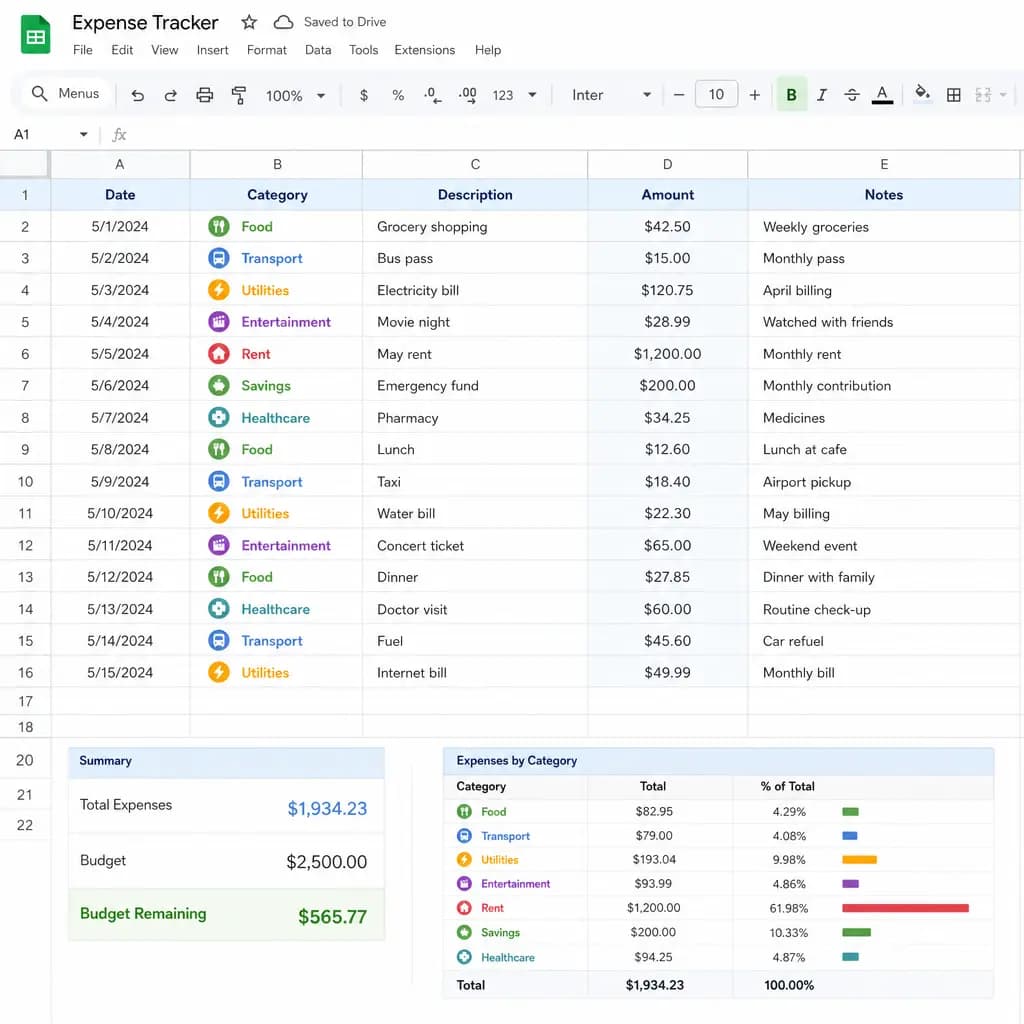
Tracking your expenses does not have to be complicated. In fact, the easiest way to track expenses is often the one you will actually stick with. Whether you are tired of wondering where your money goes each month or ready to start building your first budget, learning how to track expenses is the essential first step. This guide gives you a simple, beginner-friendly system for tracking spending—no complex spreadsheets or expensive apps required.
Expense tracking is simply recording what you spend money on. It is like keeping a food diary, but for your finances. When you track expenses regularly, you gain visibility into your spending habits and can make informed decisions about your money. The benefits are clear:
- Know where your money actually goes (not just where you think it goes)
- Identify spending leaks—those small purchases that add up
- Make conscious choices instead of wondering why you are short at month end
- Build the foundation for budgeting and financial goals
Most importantly, expense tracking reduces money stress. When you know the numbers, you can stop guessing and start planning.
Start by collecting one month of statements from your checking account, all credit cards you use, and any debit cards or payment apps. You do not need to go back months—just the most recent complete month. If you use cash frequently, estimate your cash spending or start tracking from today.
Separate your spending into two categories. Fixed Expenses stay the same: rent, insurance, car payments, subscriptions. Variable Expenses change: groceries, dining out, entertainment, gas, clothing. This distinction helps you see what is flexible versus what is locked in.
Create 5 to 8 broad spending categories: Housing, Food, Transportation, Personal, and Financial. Do not overthink it. The goal is clarity, not perfection.
Choose the method that fits your style and budget:
- Spreadsheet (Google Sheets, Excel) - works best for detail-oriented beginners who want full control
- Budgeting apps (YNAB, Monarch Money, Copilot) - modern alternatives with automatic transaction imports and smart categorization
- Notebook or notes app - works for cash-heavy spenders who prefer manual tracking
- Bank built-in tools - many banks now offer spending categorization inside their mobile apps
The best tool is the one you will actually use consistently. Start simple and upgrade later if needed.
Weekly reviews take 10 minutes to check categorization and spot unusual spending. Monthly reviews take 30 minutes to compare trends across categories. The power comes from reviewing, not just recording.
- Being too detailed—20 categories create friction and burnout
- Forgetting cash spending—track withdrawals or estimate weekly cash use
- Reviewing only monthly—weekly check-ins catch issues early
- Ignoring irregular expenses—divide annual costs by 12 for monthly accuracy
A mostly accurate system you maintain beats a perfect one you abandon after two weeks.
After 2 to 3 months of tracking, you will know what you actually spend on groceries, whether dining out is a 50 or 500 dollar habit, and where you have wiggle room. Armed with real numbers, you can budget with confidence instead of guessing.
- Days 1 to 2: Gather statements and categorize last month of spending
- Days 3 to 4: Choose your tracking method and set up your system
- Days 5 to 7: Track every purchase daily and do your first weekly review
After one week, you will have more clarity about your spending than most people ever achieve.
Tracking expenses is not about restriction—it is about awareness. You are not trying to punish yourself for spending; you are learning where your money goes so you can direct it toward what matters most to you. Start simple, stay consistent, and watch your financial confidence grow. The goal is progress, not perfection.
Take control of your money today
Start free with Spendmate — track expenses, plan budgets, and reach your financial goals.
Start free with Spendmate