
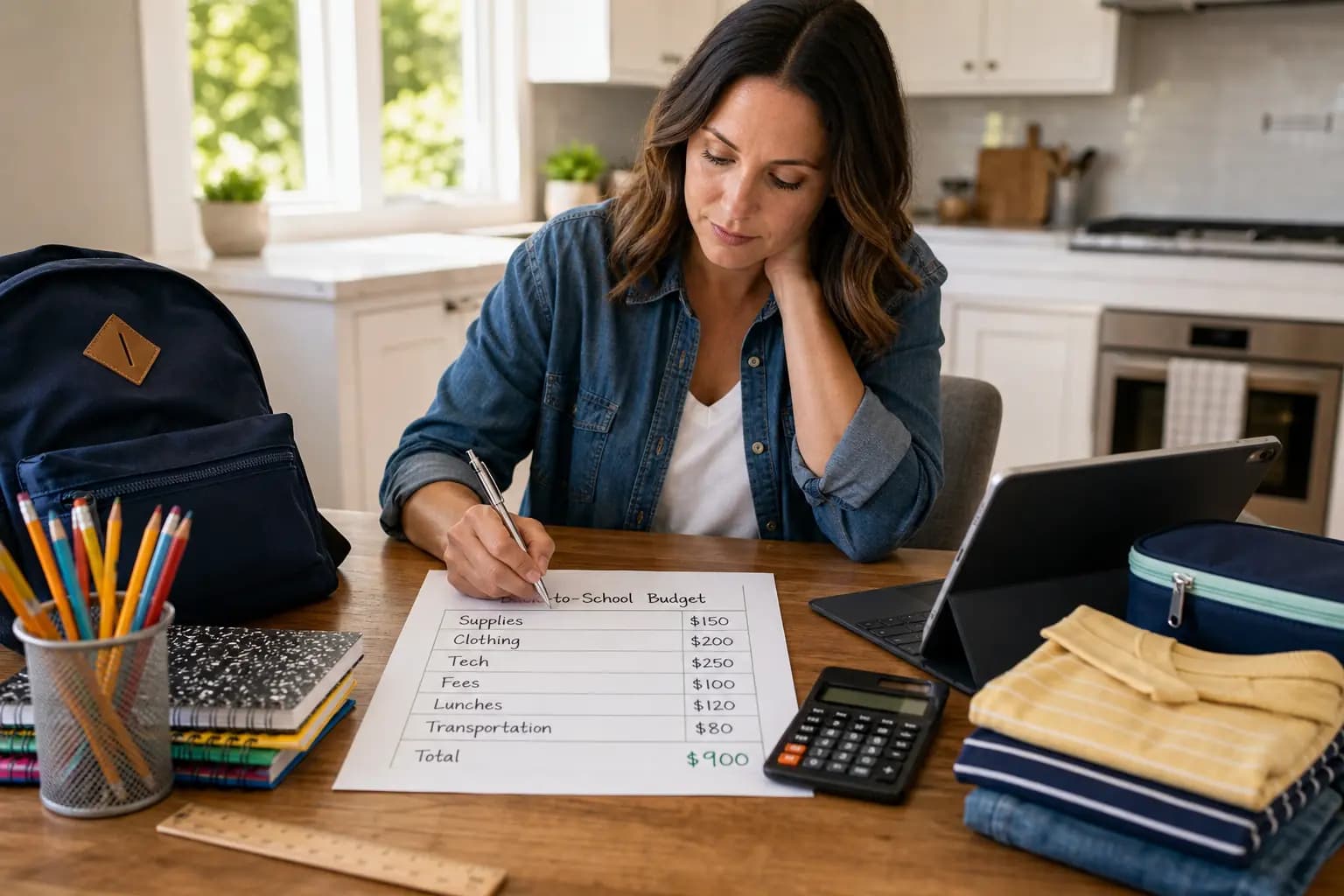
Back-to-school expenses include more than notebooks and backpacks. When you set one total spending cap, split costs into clear categories, and plan for fees that show up later, school shopping stays manageable without leaning on credit cards. This simple plan helps parents organize one child or multiple kids and prepare for both first-day purchases and the costs that arrive after school starts.
What back-to-school expenses include
Back-to-school expenses are all the costs that help your child start and stay ready for the school year. That includes obvious purchases like school supplies and clothing, plus less visible costs such as lunch money, transportation, activity fees, aftercare, and technology.
- School supplies and classroom items
- Backpacks, lunch boxes, and water bottles
- Clothes, shoes, and uniforms
- Chromebooks, calculators, headphones, or software
- Registration fees, club costs, and classroom contributions
- Lunch accounts, bus passes, fuel, or parking
- After-school care, tutoring, and surprise requests after school begins
If you only budget for the shopping trip, you can still feel caught off guard later. A better back-to-school budget covers the full season, not just the first week.
Set your total spending cap before you shop
Start with the biggest number first: the most your household can spend without using debt. Look at this month’s bills, savings goals, and other seasonal costs before deciding what is realistic. A spending cap gives every later decision a boundary.
- Review your available cash for school spending.
- Choose a firm total cap for all back-to-school expenses.
- Set aside a small buffer for late fees or missing items.
- Split the cap into categories before anyone shops.
For example, a family might set a total cap of $600, keep $75 for surprise costs, and divide the rest across supplies, clothes, shoes, tech, and school fees. The exact amount matters less than deciding it before carts start filling up.
Separate one-time buys from recurring school-year costs
One reason school shopping blows up a budget is that families mix startup costs with ongoing costs. Separate them so you know what must be paid now and what will repeat during the year.
One-time purchases
- Supply list items
- Uniform basics or first-week clothing
- Backpacks and lunch gear
- Required calculators or devices
Recurring school-year costs
- Lunch money or cafeteria account refills
- Transportation costs
- After-school care
- Sports, clubs, and activity fees
- Tutoring or classroom requests that show up later
This split makes it easier to avoid spending your full budget too early. It also helps you see whether a monthly sinking fund is needed for the months after school starts.
Build your shopping list by category
A category-based school shopping budget is easier to control than one long mixed list. Create a separate line for each type of expense and estimate the cost before you shop.
School supplies and classroom items
Use the school list first, then check what you already have at home. Pens, folders, scissors, rulers, and art supplies are often easy to reuse. Only buy what is still missing.
Clothes, shoes, and uniforms
Set limits by item count instead of shopping broadly. A child may need one pair of shoes, two uniform bottoms, or a few basics, not a full seasonal wardrobe in one trip.
Technology, calculators, and software
Tech can wreck a budget fast, so treat it as its own category. Confirm what is required by the school and skip optional upgrades unless your budget clearly allows them.
Simple budgeting formula: total cap minus buffer equals planned shopping budget. Then assign each category a limit before you compare prices.
Plan for fees, tech, and after-school costs
Many parents underestimate the costs that arrive after the shopping bags are unpacked. Registration fees, lunch deposits, bus passes, field trips, club dues, and aftercare can quietly push you over budget if you do not make room for them now.
- Ask the school which fees are due immediately and which come later.
- Estimate monthly transportation and lunch costs for the first semester.
- Keep a buffer for teacher requests, activity signups, or replacement items.
- If after-school care or tutoring is likely, include it now instead of hoping it will fit later.
This is especially important if school shopping lands near other expensive seasons, like holiday saving, moving, or annual insurance payments. Your budget should reflect the real calendar, not an ideal one.
Save money with inventory, sales, and tax-free weekends
Savings tactics matter, but they work best after the budget is built. Take inventory first, compare prices second, and use sales or tax-free holidays as tools rather than excuses to buy extra.
- Shop your home before the store.
- Compare prices across two or three retailers.
- Use school lists to avoid impulse buys.
- Time larger purchases around real discounts or tax-free weekends when available.
- Pause on any item that pushes a category past its limit.
The goal is not finding the perfect deal on everything. The goal is staying under the spending cap while covering what your child actually needs.
How to budget for one child vs multiple kids
Families with multiple children need a shared plan and separate category lists. Start with one household cap, then divide by child based on grade level, required supplies, and known fees instead of splitting the money evenly by default.
- List shared items once, such as household printer paper or lunch containers already at home.
- Assign child-specific limits for supplies, clothing, and fees.
- Reuse hand-me-down items where practical before buying duplicates.
- Prioritize required purchases for each child before optional extras.
Older students may need higher tech or calculator budgets, while younger children may need more classroom supplies or aftercare support. A fair budget is based on actual needs, not identical totals.
What to do if the budget is already tight
If money is limited, focus on required items first and spread non-urgent purchases over the first few weeks. Talk with the school about timing for fees, check community supply drives, and avoid putting school shopping on a credit card unless you already have a clear payoff plan.
A tight budget does not mean you failed. It means your plan needs to protect essentials first and leave room for the costs that matter most.
You can also build a small next-year sinking fund once this season ends. Even saving a little each month can make the next back-to-school cycle far less stressful.
FAQ
How much should I budget for back-to-school expenses?
Budget the amount your household can pay without debt, then divide it across supplies, clothes, tech, fees, lunches, transportation, and a small surprise-cost buffer. The right number depends on your child’s grade level and what you already own.
What should be included in a school shopping budget?
Include school supplies, clothing, shoes, uniforms, backpacks, lunch gear, calculators, devices, registration fees, transportation, lunch money, after-school costs, and likely surprise requests after the year begins.
How do I budget for multiple children?
Use one total family cap, then create child-specific category limits based on actual needs. Reuse shared items and hand-me-downs before buying duplicates.
Should I include tech and uniforms in the budget?
Yes. Required technology and uniforms are core back-to-school expenses and should be planned as separate categories so they do not swallow the rest of the budget.
How do I avoid going into debt for school shopping?
Set a spending cap before shopping, buy required items first, keep a buffer for surprise fees, and avoid using credit for costs you cannot repay quickly.
Total your school-year costs this week, set one back-to-school spending cap, and start a small sinking fund for next year so the next season feels easier from day one.
Take control of your money today
Start free with Spendmate — track expenses, plan budgets, and reach your financial goals.
Start free with Spendmate