Master Budgeting, Expenses & Taxes | Financial Planning Guide
A complete guide to budgeting, expense tracking, and tax planning. Learn how to manage money better using a smart finance app.
Latest Trends & Articles
 budgeting
Budgeting for Beginners Singapore: A Step-by-Step Guide (2026)
Many Singaporeans earn a decent income but still feel confused about where their money goes. The good news: budgeting is simpler than you think, and you do not need spreadsheets or a finance degree to do it. This guide walks you through how to budget in Singapore, using real local costs like MRT fares, hawker meals, and CPF deductions. Key Takeaways: (1) Your CPF contribution counts as savings — do not ignore it. (2) The 50/30/20 rule adapts well to Singapore salaries when you account for CPF.

HDB Loan vs Bank Loan Singapore (2026): Which Costs You More Per Month?
{'feature_image': {'description': 'Singapore HDB flat with city skyline in background, representing the HDB loan vs bank loan housing decision for Singapore first-home buyers', 'alt': 'HDB loan vs bank loan Singapore 2026 - comparing housing loan options for Singapore BTO and resale flats', 'media_path': 'https://assets.shoninfox.com/article/2026-06/article-926-feature.webp'}, 'content': [{'type': 'paragraph', 'text': 'For most Singaporeans, choosing between an HDB concessionary loan and a bank
 budgeting
Budgeting for Beginners Singapore: Your First Budget in 30 Minutes
You just got your first payslip. Or maybe you have been working for a few years but you have no idea where your money goes. Every month, you earn, you spend, and by the 25th you are wondering where it all went. Sound familiar? You are not alone. Most Singaporeans were never taught how to budget — it was not in school, it was not at home. So we figure it out the hard way: by running out of money before month end. This guide walks you through your first budget in 30 minutes — with real Singapore i
 side hustles
15 Best Side Hustles in 2026: Ranked by Earning Potential (With Real Numbers)
A side hustle is part-time work done alongside primary employment to generate additional income. In 2026, with 36% of US workers now participating in gig work and inflation still elevated, finding the best side hustle requires knowing which opportunities actually pay. This guide ranks 15 side hustles by real earning potential, startup costs, and time to first paycheck, based on current 2025-2026 market data.
 smart spending
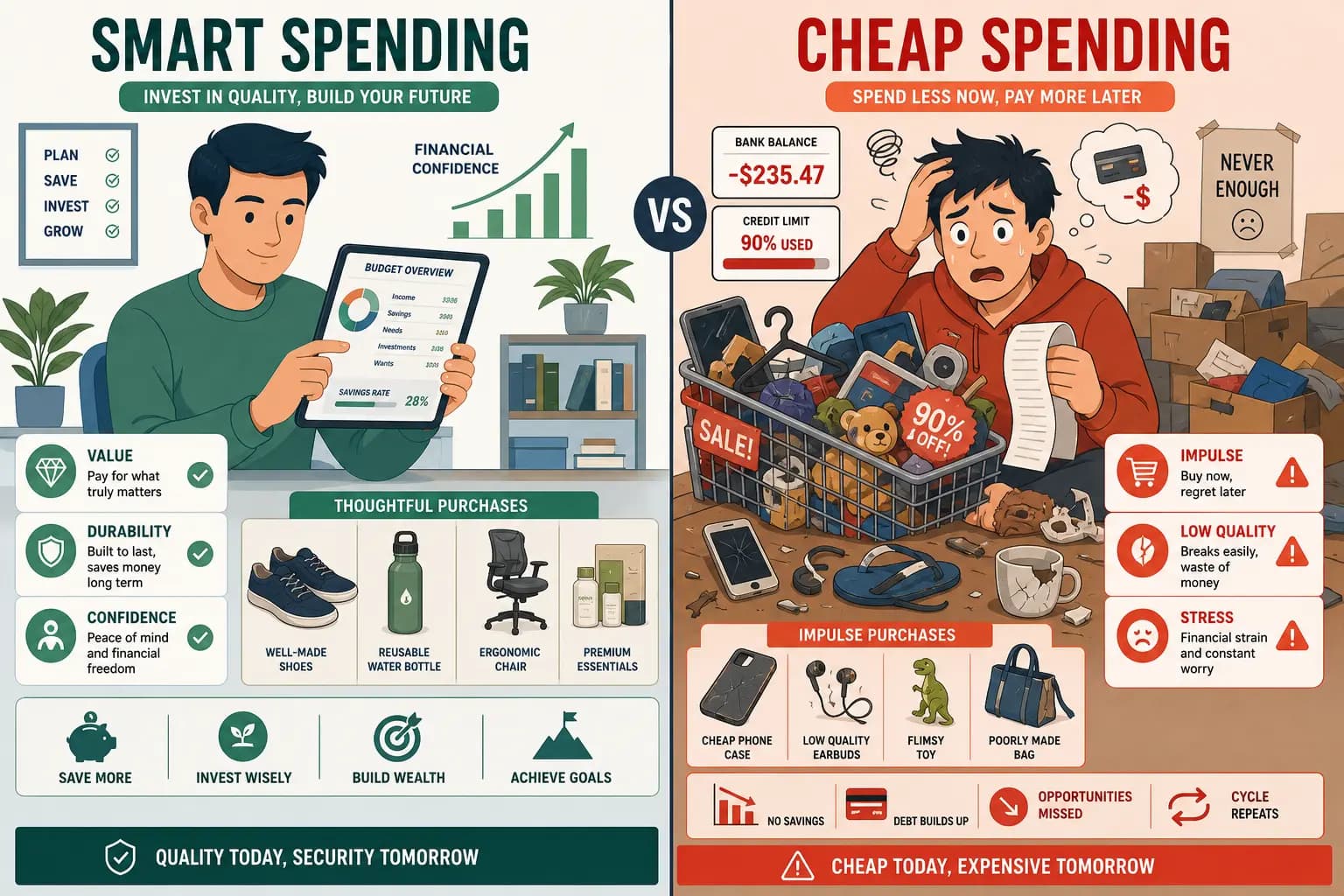
Smart Spending vs Cheap Spending: 10 Key Differences (And How to Know Which One You're Doing)
You have been told to save money your whole life. But nobody told you there is a difference between spending smart and being cheap. One builds wealth and happiness. The other makes you miserable and costs you more in the long run. This guide breaks down the 10 key differences, helps you identify which category you fall into, and provides a practical framework for making smarter spending decisions in 2026.
 budgeting for beginners
Budgeting for Beginners Singapore (2026): A Step-by-Step Guide to Managing Your Money
You just received your first payslip. After CPF deductions, your take-home is $3,200. Rent is $900. Phone bill is $60. Food is $500. You look at your bank account and wonder: where did my money go — and how am I supposed to save for a BTO, an overseas trip, AND build an emergency fund? As a financial writer who has interviewed dozens of Singapore CPAs and coached young professionals through their first budgets, here is what actually works: budgeting in Singapore is harder than it looks. Rent eat
 frugal living
Frugal Living Without Sacrificing Happiness: The Joy-First Guide to Saving Money
After five years writing about personal finance and interviewing hundreds of people about their spending habits, I have come to believe one thing firmly: frugal living has a reputation problem. When most people hear "frugal," they think of deprivation — canceling subscriptions, eating rice and beans, saying no to every invitation. No wonder so many people give up. But here is the truth no one tells you: frugal living isn't about giving up what you love. It's about stopping the waste on things yo
 impulse spending
The 30-Day Impulse Spending Detox: Break the Cycle and Save $200-$500/Month
You know the feeling. You are scrolling through Instagram, see an ad for a dress you 'need,' and 30 seconds later it is on its way to your door. Or you are at Target for toothpaste and walk out $87 lighter. Or it is 11 PM and you are buying a kitchen gadget you will use exactly once. This is not a character flaw — it is your brain's dopamine system working exactly as designed. The average American spends $314 per month on impulse purchases, according to a 2025 Consumer Psychology study published
 frugal living
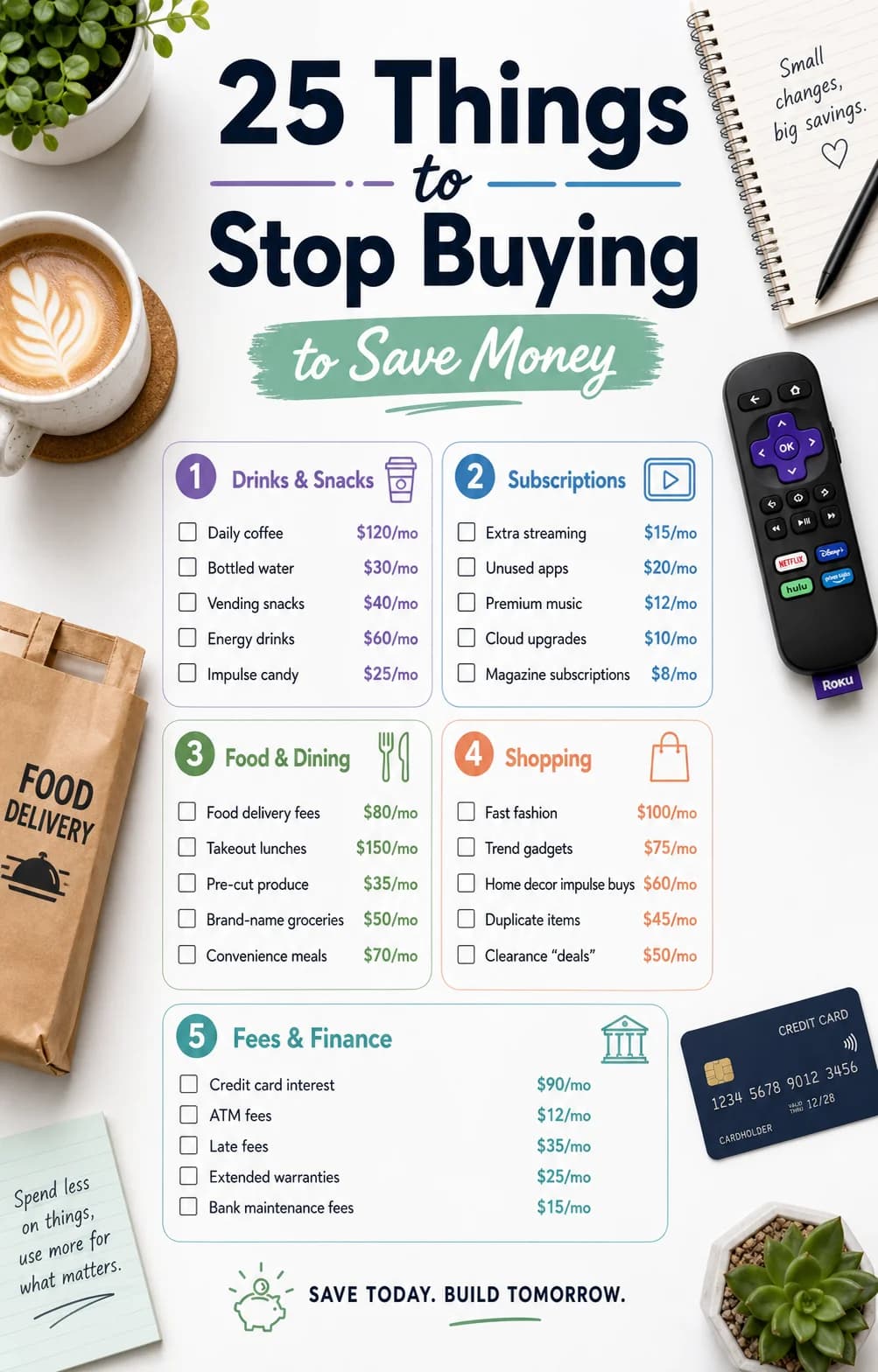
25 Things I Stopped Buying to Save Money (And Exactly How Much I Saved)
I used to spend $450 a month on things I didn't even realize I was buying. Daily coffee runs, subscription services I forgot I had, brand-name groceries, and random 'treat yourself' purchases that seemed small but added up to thousands every year. One spending audit later, I had a list of 25 things I stopped buying — and exactly how much each one saved me. The total: $510 per month, or $6,120 per year. Here's the complete breakdown. Why I Started Cutting — The Wake-Up Call It started with a