
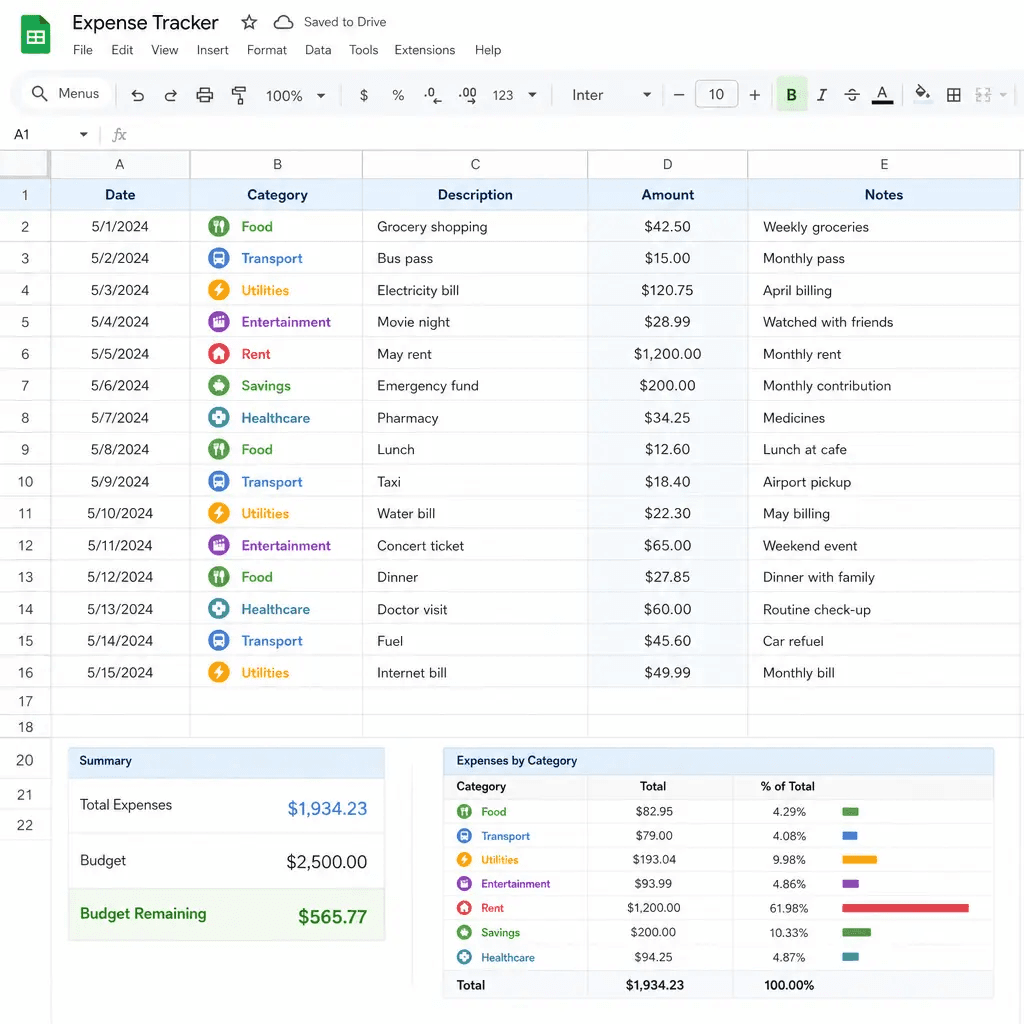
How to Track Expenses Without Getting Overwhelmed
Expense tracking is the foundation of good money management. When you know exactly where your money goes each month, you can make smarter decisions, catch spending leaks, and build habits that lead to financial stability. This guide walks you through a simple system you can start today.
Why Tracking Expenses Matters
Most people avoid tracking expenses because they think it requires complex spreadsheets or hours of data entry. The truth is simpler: tracking expenses helps you identify hidden spending patterns, spot unnecessary subscriptions and fees, prepare for irregular costs before they surprise you, build confidence with your money, and create a realistic budget that actually works.
What to Track First
If you are starting from scratch, begin with four categories. Income means your take-home pay after taxes and deductions, including any side income. Fixed expenses are bills that stay the same each month like rent, mortgage, insurance, loan payments, and subscriptions. Variable expenses change month to month such as groceries, gas, dining out, entertainment, and personal care. One-time or irregular costs include annual fees, car maintenance, gifts, and seasonal expenses.
Step 1: List Your Income and Fixed Bills
Grab a piece of paper or open a blank spreadsheet. Write down your monthly take-home income and every fixed bill you pay. For example, Sarah earns $3,200 after taxes and lists her fixed bills: rent $1,200, car insurance $85, phone $60, Netflix $16, and student loan $250. Her total fixed expenses equal $1,611, leaving $1,589 for everything else.
Step 2: Review Bank Statements and Subscriptions
Log into your bank and credit card accounts. Look at the last 30-60 days of transactions. You are looking for recurring subscriptions you forgot about and spending patterns you did not notice. Many people discover $20-50 per month in forgotten subscriptions. This step also helps you spot which variable expenses consume the most money.
Step 3: Choose a Tracking Method
Modern budget apps can sync with your bank, categorize transactions automatically, and send alerts when you are nearing category limits. That convenience helps if you want automation, but you should still review categories for accuracy. Spreadsheets give you full control and privacy but require manual entry. Paper tracking with a notebook keeps you mindful of each purchase but needs discipline. Pick one method and commit to it for at least 30 days before switching.
Step 4: Categorize Your Spending
Group expenses into Fixed, Variable, Needs, and Wants. Start with 5-7 categories to avoid overwhelm. For example: Housing (rent, utilities), Transportation (gas, insurance, maintenance), Food (groceries, dining out), Personal (clothing, haircuts, gym), and Entertainment (streaming, hobbies). You can add more categories later as you learn your spending patterns.
Step 5: Review Expenses Weekly
Set a recurring 15-minute appointment on your calendar. Once a week, look at what you spent and compare it to your plan. This weekly review helps you catch overspending early and adjust before the month ends. Sunday evening or Monday morning works well for most people.
Common Beginner Mistakes
- Tracking every penny from day one and burning out after two weeks
- Creating too many categories and making the system complicated
- Giving up after one bad spending week instead of adjusting
- Not accounting for irregular expenses like car maintenance or gifts
- Comparing your spending to others instead of focusing on your own goals
FAQ
What is the easiest way to track expenses?
The easiest way is whichever method you will actually use consistently. If you hate manual entry, try an app. If you value privacy, use a spreadsheet or notebook.
Should I track expenses daily or weekly?
Weekly is usually the sweet spot. Daily tracking can become obsessive, while monthly reviews happen too late to adjust spending.
What is the difference between budgeting and expense tracking?
Expense tracking looks backward at what you already spent. Budgeting looks forward at what you plan to spend. You need both for complete money management.
Ready to take the next step? Learn how to build a complete budget that works with your expense tracking system.
Take control of your money today
Start free with Spendmate — track expenses, plan budgets, and reach your financial goals.
Start free with Spendmate