How to Budget for Utilities: A Simple Guide for Renters and Homeowners
Utilities are the household services that keep your home running, like electricity, gas, water, trash, internet, and sometimes a phone plan. If you are trying to learn how to budget for utilities, the goal is simple: estimate the real cost, spread out the seasonal spikes, and avoid getting surprised by the next bill.
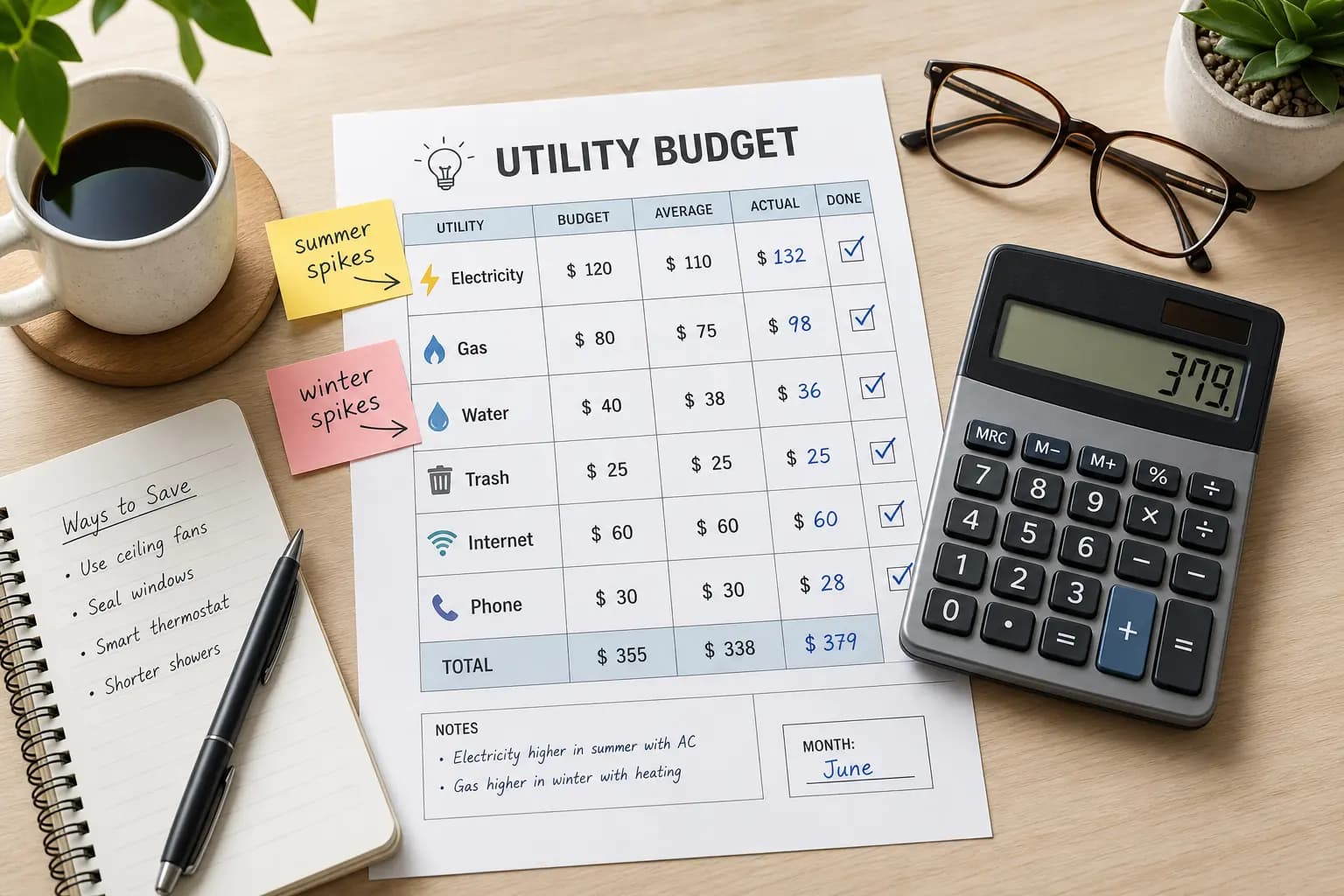
That matters because utility bills are partly predictable and partly variable. You may know your internet plan is $60 a month, but your summer air conditioning or winter heating bill can swing hard. A good utility budget gives you a realistic monthly number instead of a guess based on one mild-weather bill.
This guide walks you through a practical system for renters and homeowners. You will list each utility, estimate costs with or without bill history, separate fixed charges from usage-based costs, build a monthly budget, and add a seasonal cushion for the expensive months.
What counts as a utility bill
A utility bill is a charge for the essential services you use in your home. In plain English, these are the bills that keep the lights on, the water running, your devices connected, and your home comfortable enough to live in.
- Electricity for lighting, appliances, and air conditioning
- Gas for heating, hot water, or cooking if your home uses it
- Water, sewer, and trash services
- Internet service for home connectivity
- A phone plan if you include it in your household bills budget
Some rentals include part of these costs in the rent. For example, a lease may include water and trash but leave electricity and internet to you. That is why your first step is always to check your lease or move-in paperwork instead of assuming all utilities are separate.
Step 1: List every utility you pay for
Start with a simple checklist. You cannot build a reliable utility bill budget if you forget one or two categories.
- Electricity
- Gas or heating fuel
- Water
- Sewer
- Trash or recycling
- Internet
- Cell phone or landline if you track it with household bills
- Any building utility fees, HOA utility charges, or service connection fees
Electricity and heating or cooling
These are often the most variable parts of a monthly utility costs plan. Air conditioning can push electricity costs up in hot months, while gas or electric heat can raise winter bills in cold climates. If your home uses HVAC heavily, expect these numbers to move more than the rest.
Water, sewer, and trash
These costs are often steadier, but they still vary by household size, local rates, and whether the provider bills monthly or every other month. Water usually rises with laundry, lawn care, long showers, or more people living in the home.
Internet and phone plans
These are usually the easiest line items to budget because they are more fixed. Still, watch for promotional rates that expire, router fees, data overages, or bundled services that quietly increase after the first year.
Step 2: Check past bills or move-in estimates
If you already live in the home, gather the last 12 months of bills if possible. A full year shows you the high and low seasons, which is much better than using one recent month. Add the bills for each category, divide by 12, and you have a much better starting point for your utility budget.
If you are moving and have no history yet, ask the landlord, property manager, seller, or utility providers for estimates. Many providers can share past usage averages for the address, typical monthly costs for the unit size, or at least seasonal ranges. That is not perfect, but it is far better than guessing.
What to do if you have no bill history
Use a layered estimate. First, confirm which utilities are included in rent. Second, ask for building or address averages. Third, compare local utility averages from your city or state. Finally, add a safety margin so your first few bills do not wreck your move-in budget.
- Ask what utilities are included in rent before you sign
- Request past bill averages from the property manager or utility company
- Use local average-cost data as a backup, not your only source
- Add a buffer if you are moving into a hotter, colder, larger, or older home
Step 3: Separate fixed charges from usage-based charges
This is where many people get clearer fast. Some utilities have a base fee that barely changes. Others depend heavily on how much you use and what the weather is doing.
- Fixed charges: internet plan, phone plan, account fees, service fees, some trash charges
- Usage-based charges: electricity, gas, water, and any bill tied to seasonal demand or household usage
When you separate these two groups, it becomes easier to see which numbers need a buffer. For example, your internet may stay at $60 every month, while your electricity might range from $75 in spring to $180 in peak summer. That difference is the reason you should not budget only from your lowest month.
Step 4: Build a monthly utility budget
Now turn your estimate into one monthly number. A simple formula works well: fixed utility costs plus average variable costs plus a seasonal cushion equals your monthly utility budget.
Example for a renter:
- Internet: $60
- Phone: $45
- Electricity yearly average: $110
- Gas yearly average: $35
- Water, sewer, and trash: $55
- Estimated monthly utility budget before buffer: $305
If the household tends to run high summer or winter bills, round the number up. In this example, a renter might budget $330 a month instead of exactly $305 so there is some room when rates or weather move against them.
Step 5: Add a seasonal buffer for high-bill months
A seasonal buffer is extra money built into your monthly utility budget so you can smooth out the months when heating or cooling costs spike. This is one of the biggest content gaps in many articles, but it is what makes the budget actually work in real life.
Instead of trying to perfectly predict each bill, use a yearly average and then add a cushion of 5% to 15%, or more if your climate is extreme and your utility history is volatile. That way, the extra summer AC cost or winter heating cost is partly pre-funded before the bill arrives.
How to budget for summer AC or winter heating
Look at last year’s three highest utility months. Compare them with your yearly average. If those peak months are much higher, spread part of that difference across the entire year. This turns a painful seasonal jump into a manageable monthly habit.
- Use a yearly average when you have 12 months of bills
- Add a buffer for heat waves, cold snaps, and rate increases
- Keep the buffer in your regular budget or a small utility sinking fund
- Recalculate every six to twelve months as usage and rates change
Step 6: Lower costs without sacrificing comfort
A realistic budget comes first, then savings. If the number feels too high, look for changes that reduce waste without making your home miserable.
- Adjust the thermostat a few degrees during peak seasons
- Seal drafts, change HVAC filters, and use blinds or curtains to manage heat
- Fix leaks quickly so water costs do not creep up
- Review your rate plan, internet package, and phone plan once a year
- Run large appliances during off-peak hours if your utility plan rewards it
Helpful sources like the U.S. Energy Information Administration, Energy Saver from Energy.gov, and local utility provider tools can help you understand usage patterns and find realistic ways to reduce consumption.
Utilities by housing type: apartment vs house
A utility budget for a small apartment usually looks different from one for a detached house. Apartments often have less square footage to heat or cool, and some buildings include water, trash, or gas in rent. Houses may have larger HVAC loads, outdoor water use, and more separate providers.
If you are trying to figure out how to budget for utilities in an apartment, check what is included before you compare your numbers with a homeowner. If you are buying or renting a house, expect more individual line items and more seasonal exposure.
Common utility budgeting mistakes
- Using one recent bill instead of a yearly average
- Forgetting utilities that are bundled into move-in costs or billed separately later
- Ignoring seasonal spikes in electricity or heating
- Assuming averages from the internet match your actual home and habits
- Failing to review rates after promotional plans expire
FAQ
How much should I budget for utilities each month?
It depends on your home, climate, and which bills are included in rent. The best method is to total 12 months of past bills, divide by 12, and then add a seasonal buffer. If you have no history yet, use provider estimates, local averages, and a safety margin.
What utilities are included in a rent budget?
That depends on the lease. Some rentals include water, sewer, trash, or even gas, while others include nothing beyond the unit itself. Always verify the lease and ask the property manager which utility bills you will pay directly.
How do I estimate utilities before moving in?
Ask the landlord, seller, or utility providers for past bill averages for the address. Then compare those numbers with local averages and add a cushion if the home is larger, older, or in a climate with heavy heating or cooling needs.
Should I budget the same amount every month?
Yes, in most cases it helps to use one monthly budget number based on your yearly average plus a buffer. That smooths out the expensive months and makes your overall household budget easier to manage.
How can I lower my utility bills fast?
Start with the biggest drivers: heating, cooling, leaks, and overpriced service plans. Small changes like thermostat adjustments, fixing water waste, and reviewing plan pricing can reduce bills quickly without forcing extreme sacrifices.
List every utility you pay, review past bills or move-in estimates, and choose one monthly number with a seasonal cushion. That one step will make your next utility bill feel much more manageable and keep the rest of your household budget steadier.
Take control of your money today
Start free with Spendmate — track expenses, plan budgets, and reach your financial goals.
Start free with Spendmate