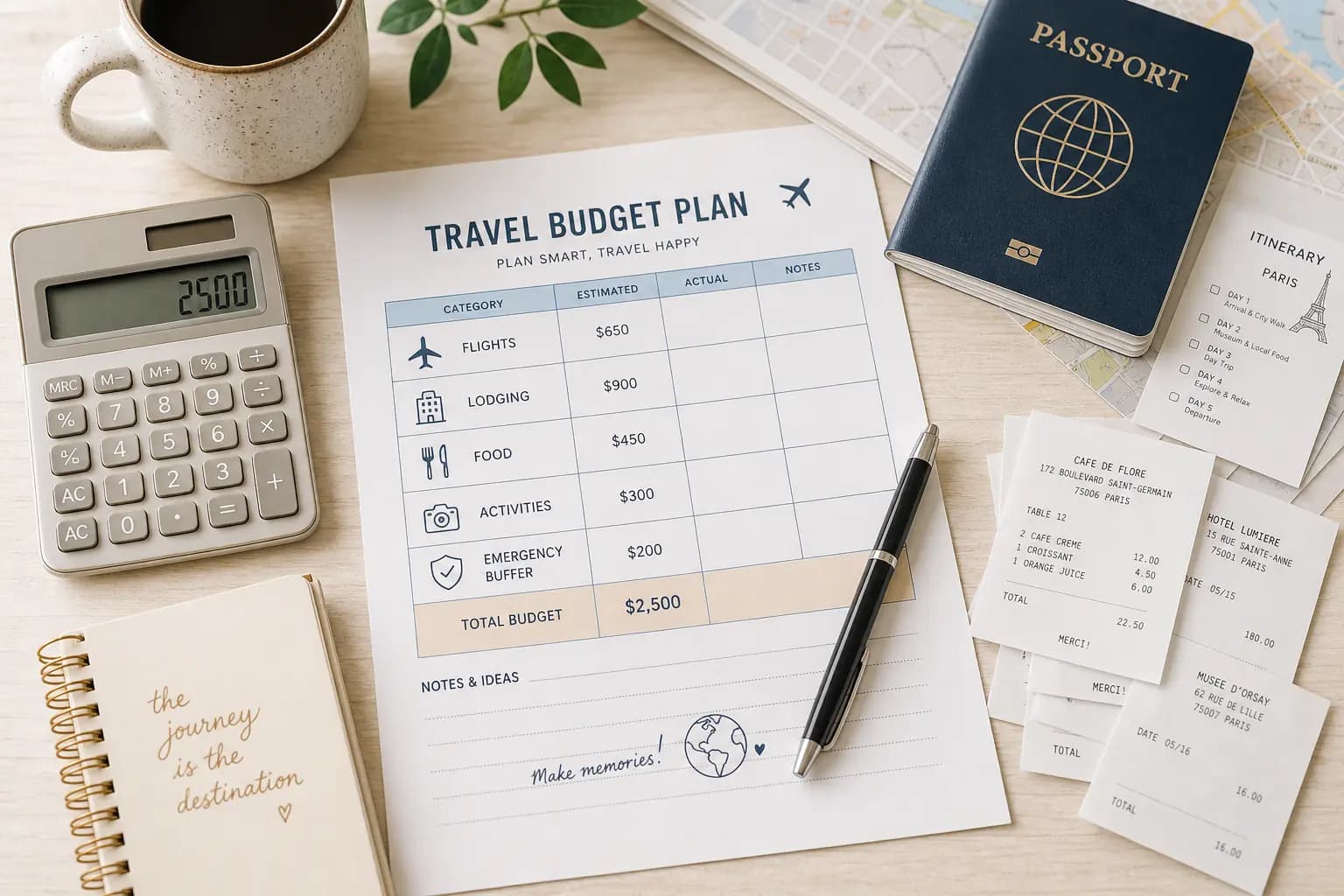
A travel budget is a simple plan for how much a trip will cost before you leave and how much you can safely spend while you are there. If you are learning how to budget for travel, the goal is not to make the trip feel restrictive. The goal is to make the trip feel affordable, clear, and less stressful.
Many people guess at the total, book the fun parts first, and hope the rest works itself out. That is where travel costs start to spill over into credit card balances, savings setbacks, or guilt after the trip ends. A better system is to split the budget into fixed trip costs, daily spending, and a small buffer for surprises.
This guide walks through a practical travel planning budget you can use for a weekend getaway, a one-week vacation, a couple trip, or a family trip. You will estimate the main cost buckets, set a savings timeline, build a daily limit, and avoid the hidden fees that catch many first-time travelers off guard.
What a travel budget is
A travel budget is the total amount you plan to spend on a trip, broken into clear categories before and during travel. In plain English, it helps you answer three questions: Can I afford this trip, how much do I need to save before I book, and how much can I spend each day without overshooting the plan?
- Pre-trip costs: flights, lodging deposits, passport fees, travel insurance, baggage fees, parking, and gear you need before departure
- On-trip spending: food, local transportation, activities, souvenirs, and daily incidental costs
- Backup money: a small emergency buffer for price changes, delays, or one unplanned expense
Step 1: Choose your trip type and destination
Start with the shape of the trip before you chase exact prices. A weekend road trip, a one-week domestic flight, and an international family vacation all need different numbers. Your destination, season, trip length, and travel style matter more than broad internet averages.
Write down four basics first: where you want to go, how many days you will be away, who is traveling, and whether this is a lean budget, a middle-of-the-road trip, or a comfort-first trip. That one page will make your travel budget much easier to build.
Solo trip vs couple vs family budget
A solo traveler may pay more per person for lodging, but a family may spend much more on food, checked bags, and activities. Couples can split hotel and rideshare costs, while families usually need larger rooms and bigger buffers. Budget by the real trip setup, not by a generic average you saw in a calculator.
Step 2: Estimate the main cost buckets
Next, price the biggest categories first. This is where most of your trip budget lives. You do not need perfect numbers on day one, but you do need realistic placeholders.
- Transportation to the destination: airfare, train tickets, road-trip gas, tolls, rental car, or airport parking
- Lodging: hotels, vacation rentals, hostels, resort fees, cleaning fees, and taxes
- Food: groceries, casual meals, one or two nicer meals, snacks, coffee, and airport food
- Activities: tours, museum tickets, park fees, entertainment, and kid-friendly attractions
- Local transportation: rideshare, subway, buses, parking, ferry fees, or extra gas
- Travel admin costs: passport renewal, travel insurance, baggage fees, roaming charges, and foreign transaction fees
Flights vs driving costs
If you are flying, compare the ticket price plus bags, seat selection, airport transfers, and airport meals. If you are driving, compare gas, tolls, hotel parking, wear-and-tear estimates, and how many nights you need on the road. AAA driving cost guidance can help you sense-check road-trip math, especially when a long drive looks cheaper than it really is.
Hotels vs vacation rentals
Hotels may look more expensive at first, but vacation rentals can add cleaning fees, higher taxes, and stricter cancellation terms. On the other hand, rentals may lower your food budget if they give you a kitchen. The right pick depends on the total cost, not the nightly headline rate.
Food, activities, and local transportation
These flexible categories are where people often under-budget. Instead of one vague number, assign a daily amount for food and local movement, then estimate any big-ticket activities separately. That keeps your vacation budget from being too optimistic.

Step 3: Set a savings timeline before you book
Once you estimate the total, work backward from your departure date. If your trip will cost $2,400 and you leave in six months, you need to save about $400 per month. If you are paid every two weeks, that is about $185 per paycheck across thirteen pay periods. This is the step many travel guides skip, but it is the step that tells you whether the trip actually fits your life right now.
Use a dedicated travel savings bucket so the money does not get mixed into groceries, bills, or weekend spending. A separate savings account or sinking fund makes progress visible and keeps the trip from competing with your everyday budget.
Monthly vs per-paycheck saving
Monthly saving works well if your income is stable and your other bills are monthly. Per-paycheck saving works better if you want smaller, more repeatable transfers. If your income is irregular, build the plan from your lowest reliable month and top it up with extras when good months come in.
Step 4: Build a daily spending limit for the trip
A daily limit helps you protect the budget after the bookings are done. Take your flexible on-trip categories, divide them by the number of travel days, and you get a working daily number. This does not mean every day has to match perfectly. It means you have a guide that tells you whether a splurge today means a quieter day tomorrow.
- Example: $560 for food over 7 days = about $80 per day
- Example: $210 for local transportation over 7 days = about $30 per day
- Example: $280 for casual activities over 7 days = about $40 per day
Some travelers prefer one total daily cap. Others like separate daily buckets for food and everything else. Either approach works, as long as you can track it quickly during the trip.
Step 5: Separate fixed costs from flexible costs
This is one of the simplest ways to make a travel planning budget feel manageable. Fixed costs are the costs you lock in before or at booking: flights, lodging, insurance, and prepaid tickets. Flexible costs are the costs you can still influence during the trip: restaurants, snacks, ride choices, and impulse spending.
When you separate them, you stop treating every dollar like it has the same job. You can decide to prepay the important parts, then use the daily budget to control the flexible part. That reduces stress because you know the essentials are already covered.
Step 6: Plan for hidden fees and emergency buffers
Hidden fees are what turn a “reasonable” travel budget into an expensive surprise. Build them into the first draft instead of pretending they will not happen. Common examples include checked bags, seat selection, hotel resort fees, cleaning fees, ATM charges, foreign transaction fees, parking, currency conversion spreads, and one or two higher-cost meals you forgot to price.
A simple rule is to add a 10% buffer for domestic trips and a little more for complex or international trips. You should also keep a separate emergency amount for a missed train, urgent medicine, last-minute transport, or a cost change after booking. CDC guidance, State Department travel pages, and your airline baggage policies are worth checking if health, document, or admin costs may apply.
How to budget for different kinds of trips
A weekend getaway usually needs tighter lodging math because two nights can still carry high transport costs. A one-week vacation needs stronger daily spending controls because food and activities can drift. An international trip needs more room for documents, insurance, airport transfers, and currency-related fees. Family travel budgets also need wider buffers because one schedule change can affect multiple people at once.
If you are unsure whether you can afford the trip, test the savings target for one month before booking. If saving that amount feels too tight, change one variable: travel off-season, shorten the trip, choose a different destination, or lower the lodging category. That is much better than booking first and hoping your future self figures it out.
Common travel budgeting mistakes
- Booking flights before pricing the full trip
- Forgetting baggage fees, parking, or airport transport
- Using only total-trip math and skipping a daily spending limit
- Not separating pre-trip costs from on-trip spending
- Skipping a savings timeline and assuming the money will appear later
- Planning no emergency buffer at all
FAQ
How much should I budget for a 1-week trip?
It depends on destination, trip style, and who is traveling. Price transportation, lodging, food, activities, and local transportation first, then add hidden fees and a buffer. A one-week trip budget should be built from real categories, not one average number.
What should be included in a travel budget?
Include transportation, lodging, food, activities, local transportation, travel insurance, baggage fees, passport or document costs when relevant, and an emergency buffer. The clearest system also separates pre-trip costs from on-trip spending.
Is it better to save monthly or per paycheck?
Both work. Monthly saving is simple for stable income, while per-paycheck saving feels easier for many people because the transfers are smaller and more frequent. Choose the method you will actually keep using.
How do I budget for a family vacation?
Start with larger lodging, food, baggage, and activity estimates than you would for solo travel. Families usually need more flexibility, so build a wider buffer and plan for schedule-related convenience costs.
Should I use a travel card or cash?
Use the payment method that helps you track spending and avoid extra fees. A card can be useful for security and booking protection, but check for foreign transaction fees. Cash can still help with daily limits in flexible categories.
Pick one upcoming trip, list the fixed costs, estimate the daily spending categories, and open a dedicated travel savings bucket. Even a rough first draft will tell you more than waiting for the “perfect” travel budget plan.
Take control of your money today
Start free with Spendmate — track expenses, plan budgets, and reach your financial goals.
Start free with Spendmate