How to Budget for Medical Expenses: A Simple Plan for Healthcare Costs
Medical expenses are the health-related costs you need to pay to stay covered, get care, and handle the bills that come after treatment. If you are trying to learn how to budget for medical expenses, the goal is not to predict every doctor visit perfectly. The goal is to separate the different types of health costs, build a monthly reserve, and feel more prepared when care is needed.
That matters because healthcare spending is rarely one neat bill. Some costs happen every month, like insurance premiums. Some happen only when you use care, like copays, coinsurance, lab work, or prescriptions. Then there are the surprise costs: urgent care, ER visits, dental work, a new pair of glasses, or a bill that arrives weeks after an appointment.
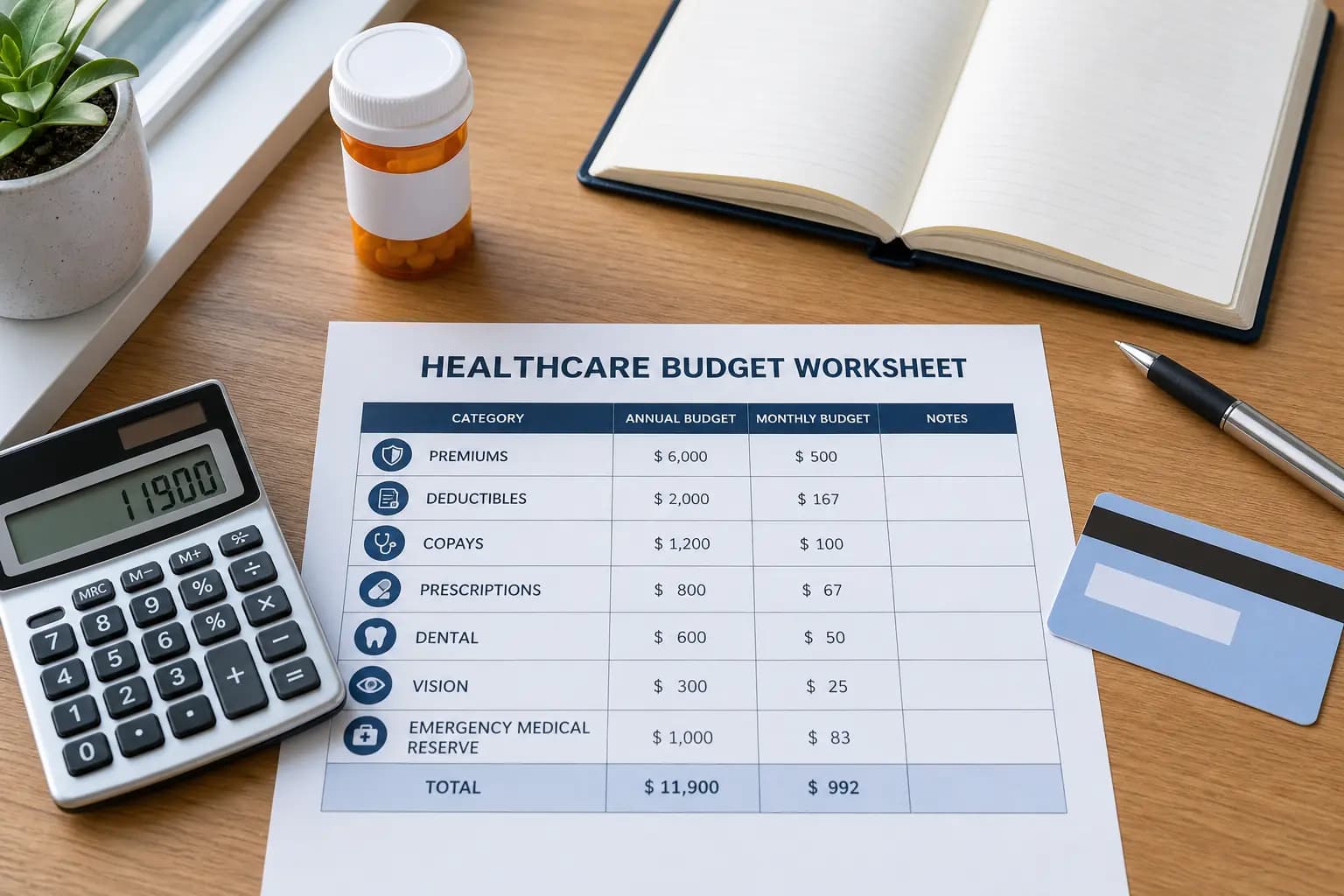
A simple healthcare budget helps you stop guessing. You can estimate your regular costs, plan for out-of-pocket risk, and build a calm system that works whether you are single, raising a family, managing a chronic condition, or enrolled in a high-deductible health plan.
What counts as a medical expense
A medical expense is any cost tied to health care, treatment, prevention, or medically necessary supplies. In plain English, it is the money you spend to stay insured, see providers, fill prescriptions, and handle the part of care that insurance does not fully cover.
- Insurance premiums
- Deductibles
- Copays and coinsurance
- Prescription medications
- Routine doctor visits
- Specialist visits
- Urgent care or emergency care
- Dental and vision costs
- Medical equipment or supplies in some situations
This is why a healthcare budget needs more than one line. Premiums are not the same as out-of-pocket costs, and routine care is not the same as surprise care.
Step 1: List your regular health care costs
Start with the expenses you can already see coming. These are the fixed or semi-predictable parts of your medical budget.
- Monthly insurance premium
- Regular prescriptions
- Therapy or specialist visits you use often
- Dental cleanings or orthodontic payments
- Vision expenses like contacts or exam plans
- Ongoing treatment costs for chronic conditions
Write down what you pay now, not what you hope to pay later. If your employer takes insurance premiums out of your paycheck, include that number in your full budget view anyway. The money still counts. A lot of people under-budget healthcare because payroll deductions feel invisible.
Premiums vs deductibles vs copays
A premium is the amount you pay to keep insurance coverage active. A deductible is the amount you usually pay out of pocket before insurance starts covering more of the bill. A copay is a flat amount for a visit or prescription, while coinsurance is a percentage of the cost after the deductible. You do not need to love the jargon, but you do need to know which bucket each cost belongs in.
Step 2: Estimate your yearly out-of-pocket risk
Once you know your regular costs, look at the risk side. This is where many people get stuck, especially if they have not had many medical bills before.
Start with these numbers from your health plan: annual deductible, out-of-pocket maximum, typical copays for primary care, specialists, urgent care, and prescriptions, plus any separate pharmacy deductible if it applies.
You are not trying to budget your full out-of-pocket maximum every year unless your care pattern makes that realistic. Instead, build a working estimate based on what you actually expect to use.
- 4 primary care visits at $30 copay = $120
- 2 specialist visits at $60 copay = $120
- Monthly prescriptions at $45 = $540 per year
- Lab work estimate = $200
- One urgent care visit = $90
That simple estimate already gives you a clearer yearly target than guessing.
Routine care vs surprise care
Routine care includes the costs you can plan around: checkups, regular prescriptions, predictable specialist visits, and standard dental or vision appointments. Surprise care includes accidents, infections, emergency treatment, unexpected scans, or a bill that lands after a procedure cost more than expected. Keeping those two categories separate makes your medical expense budget much easier to manage.
Step 3: Convert annual costs into a monthly set-aside
This is the step that turns healthcare budgeting from stressful to usable. Add your estimated yearly out-of-pocket costs, then divide by 12 to create a monthly reserve.
- Annual prescriptions: $540
- Copays and specialist visits: $240
- Lab work and routine care: $320
- Dental and vision reserve: $600
- Surprise-care buffer: $900
- Total yearly non-premium health costs: $2,600
$2,600 divided by 12 is about $217 per month.
That monthly set-aside can live in a dedicated savings bucket, a sinking fund, or alongside your HSA or FSA planning. The point is to make future care feel pre-funded instead of chaotic.
Should I budget monthly or yearly for healthcare?
Both matter. Yearly planning helps you see the true size of the cost. Monthly planning makes the cost manageable. Use the annual estimate to decide the number, then use the monthly set-aside to actually live with it.
Step 4: Prepare for prescriptions, dental, and vision
These categories are easy to under-budget because they often sit outside the main doctor-visit conversation.
Prescriptions can be steady, seasonal, or unpredictable if medication changes. Dental costs may include cleanings, fillings, orthodontics, or work your dental plan only partly covers. Vision costs can include exams, lenses, contacts, coatings, or replacing broken glasses.
A practical healthcare budget gives these categories their own room instead of hoping they fit inside a generic medical line.
- Keep a separate estimate for ongoing prescriptions
- Save ahead for known dental work
- Include annual eye exams or replacement lenses if you use them
- Add more room if a child, partner, or parent in your household has recurring care needs
Medical expense budget for families and chronic-care households
Families usually need a wider buffer because more people means more appointments, more prescriptions, and more chances for surprise costs. Households managing chronic conditions may also need a bigger reserve because care happens more often and pharmacy spending is less optional. In those cases, budgeting close to your usual real pattern matters more than relying on a generic internet average.
Step 5: Build a buffer for surprise medical bills
Even a strong insurance plan does not remove every surprise. You may need urgent care on a weekend, a specialist follow-up after a test, a bill adjustment after insurance processes a claim, or a payment before reimbursement lands.
That is why every healthcare budget should include a surprise-care buffer. This buffer is separate from your emergency fund, although the two can work together.
- Lower-use households: start with $500 to $1,000
- Families or higher-risk households: consider $1,000 to $3,000 or more
- High-deductible plan households: often need a larger buffer because early-year costs hit harder
If you cannot build the full buffer right away, start with one month of healthcare reserve and grow it steadily. Prepared beats perfect.
How to handle medical payment plans
If you receive a bill you cannot pay all at once, do not ignore it. Ask for an itemized bill, confirm the insurance processing is correct, and then ask about an interest-free payment plan or financial assistance policy. A payment plan is still part of your budget, but it is better to manage it intentionally than let it drift into collections or panic.
Step 6: Use HSA and FSA accounts wisely if available
If your job or health plan offers an HSA or FSA, these accounts can make your medical budget work better.
- HSA: Usually paired with a high-deductible health plan. Contributions are tax-advantaged, and the funds can roll over year to year.
- FSA: Also tax-advantaged, but plan rules matter more because some balances may not fully roll over.
Think of these accounts as part of your healthcare system, not a separate financial mystery. If you use an HSA, your monthly medical reserve may partly live there. If you use an FSA, estimate carefully so you contribute enough to be useful without overfunding it.
High-deductible plan budgeting
If you have a high-deductible health plan, do not budget only for premiums. Build your plan around the deductible and your expected early-year costs. This is where many people feel blindsided: the monthly premium looks manageable, but the first real medical event hits hard. A strong healthcare reserve can take some of that shock out of the year.
How to budget for medical expenses by household type
A single healthy adult may focus on premiums, routine care, and a modest surprise-care buffer. A family with children may need more room for urgent care, seasonal illnesses, dental visits, and vision changes. A caregiver or chronic-care household may need a larger monthly set-aside because recurring treatment costs are part of normal life, not rare exceptions.
The best healthcare budget is the one that matches your real care pattern. Calm realism beats false optimism every time.
Common healthcare budgeting mistakes
- Treating premiums as if they are the only health cost that matters
- Forgetting dental, vision, and prescriptions
- Not checking the deductible and out-of-pocket maximum
- Budgeting nothing for surprise care
- Assuming one healthy month represents the full year
- Ignoring payment-plan options when a bill is too large to pay at once
FAQ
What medical costs should I budget for?
Budget for premiums, deductibles, copays, coinsurance, prescriptions, routine care, specialist visits, dental, vision, and a buffer for surprise bills. The right mix depends on your plan and your household’s care needs.
How do I save for copays and prescriptions?
Estimate what you usually spend in a year, then divide that number by 12 and move it into a dedicated healthcare savings bucket each month. This works especially well for households with recurring prescriptions or therapy visits.
What if I have a high-deductible plan?
Focus on the deductible, likely early-year spending, and the size of your out-of-pocket risk. High-deductible plans often need a larger healthcare reserve because you may pay more upfront before coverage becomes more helpful.
Are HSA funds part of my budget?
Yes. If you use an HSA, it should be part of how you plan for medical costs. It is not extra money. It is one of the tools helping you cover health expenses with more structure.
Should I budget monthly or yearly for healthcare?
Use both. Estimate the annual cost so you understand the full picture, then turn that number into a monthly set-aside so your budget can actually carry it.
List your premiums, recurring care costs, and likely out-of-pocket spending for the year. Then turn that estimate into one monthly healthcare reserve number and start funding it. A simple system now can make the next medical bill feel far less disruptive.
Take control of your money today
Start free with Spendmate — track expenses, plan budgets, and reach your financial goals.
Start free with Spendmate